From scrapyard to Rembrandtplein
Maurits Caransa, known to everyone as Maup, was born in Amsterdam on 5 January 1916 into a poor Jewish family; his father was a coal merchant. He married a Catholic woman in 1941 and survived the war. His parents and three brothers did not. After the liberation he started trading in army surplus and second-hand car parts, and put the profits into bricks and mortar. By the early 1960s he was a full-blown property man. He owned the Schiller Hotel and much of the Rembrandtplein, held Hotel De Doelen and bought and sold the Amstel Hotel and Hotel Americain, among others. The notorious Maupoleum on the Jodenbreestraat is named after him too: the building was put up in 1971 by a consortium he belonged to.
Ironically, when he could not sleep as a child, his mother told him he 'might as well go and sleep in De Doelen'. Later he owned the hotel. He was a close friend of Ajax chairman Jaap van Praag, often sat in the boardroom and travelled to European matches, although he refused to buy the club.
In Amsterdam his name became practically a synonym for wealth. According to Jan Vriend in his book about Amsterdam, a customer haggling at the Waterlooplein market would say: "You're too expensive. I'm not Caransa."
The kidnapping
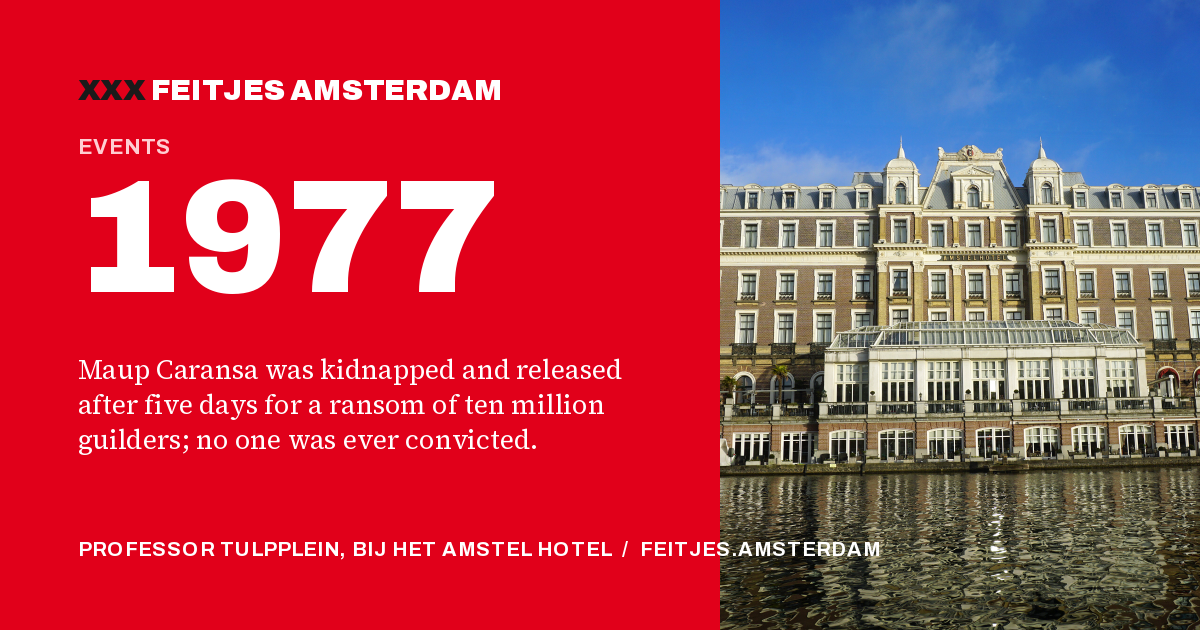
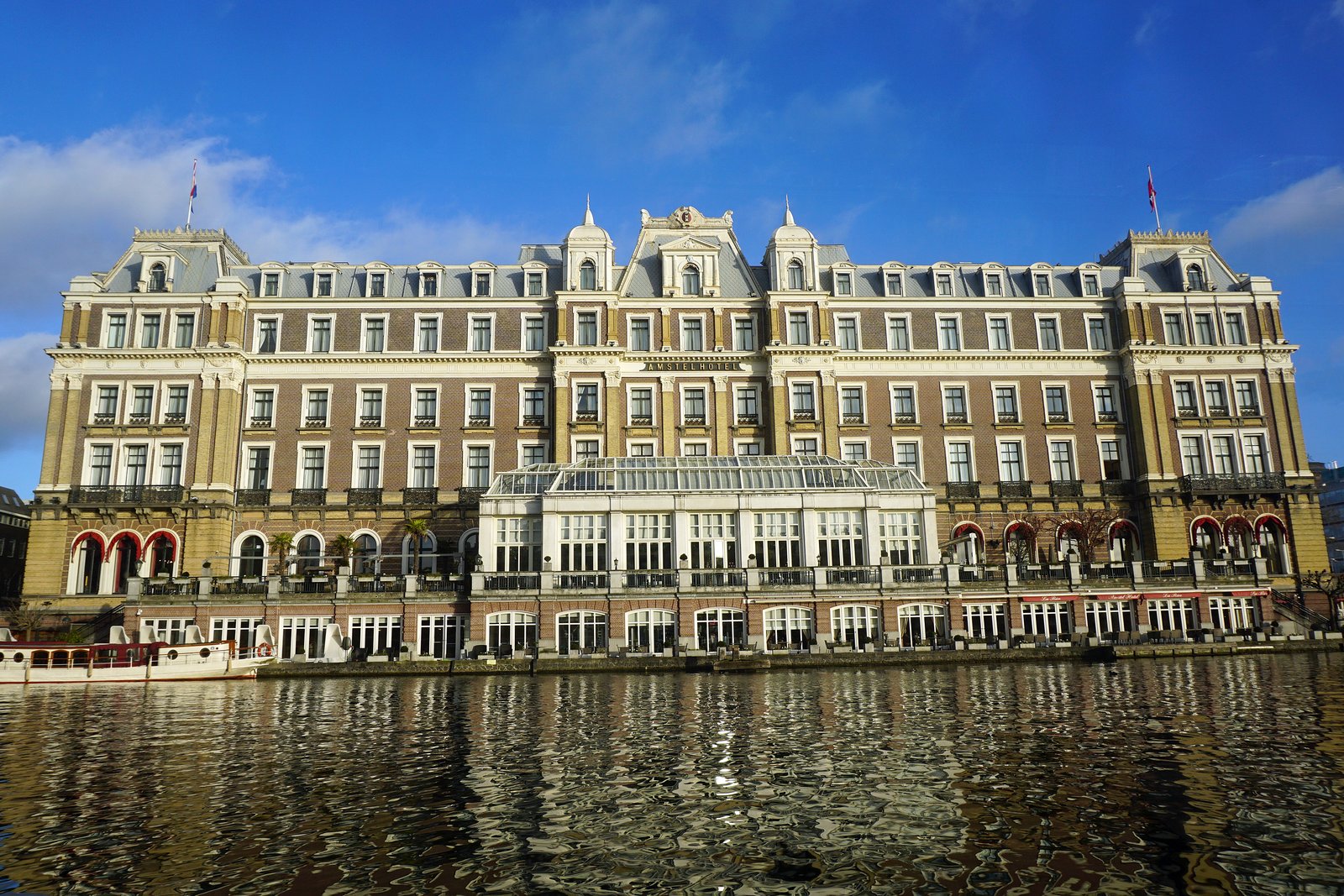
Every week Caransa played bridge at the Continental Club, close to the Amstel Hotel, which he owned at the time. Shortly after one in the morning, in the night of 27 to 28 October 1977, he walked down the steps to the Professor Tulpplein on his way to his Rolls-Royce. Four men in balaclavas grabbed him and pushed him into a small red car.
For the first few days the police suspected the German terrorist group RAF, which was active in Germany that autumn. But this was something else: it was the first kidnapping in the Netherlands that was purely about ransom.
Negotiating your own ransom
Caransa was held for five days, according to later reconstructions on a farm in Middelie, between Edam and Purmerend. He himself spoke of "120 hours in a pen, in the dark, tied up". The kidnappers first demanded forty million guilders. Caransa, a businessman to the bone, negotiated himself and got the sum down to ten million. Through a note with instructions to his lawyer, the money was made ready: ten million guilders in new thousand-guilder notes, the red 'rooie ruggen'. The money was collected from a car on the Utrechtsestraat. The police were not allowed to follow the kidnappers.
In the night of 2 to 3 November Caransa was dropped off blindfolded at the Zoutkeetsgracht. He hailed a taxi, had himself driven to police headquarters and called out: "I'm Caransa, help me!"
I used to be in the papers every day, but all that publicity has now cost me ten million.
Maup Caransa after his release
Caransa thousands, but no arrests
Then the hunt for the money began. 'Caransa thousands' turned up in Italy, Turkey and Lebanon among other places, but only about half a million was ever recovered. An Italian mafioso was caught with 480 of the notes but kept silent. In 1978 the police even used a German undercover officer posing as a buyer of the ransom money, but he pocketed some of it himself and the operation was called off.
In the early 1980s journalists Cees Koring and Peter R. de Vries revealed in De Telegraaf who they believed was behind it: five Dutchmen from the Amsterdam drugs scene and three Italians. They also found the farm in Middelie, which Caransa recognised during a reconstruction. But there was never enough evidence for a conviction. Years later one of the alleged kidnappers confessed in a weekly magazine, only to retract it afterwards. No one was ever convicted of the kidnapping.
Caransa suffered panic attacks afterwards, especially when he was alone. He died on 6 August 2009, aged 93. The company bearing his name is still active in Amsterdam property.
Six years after Caransa, Amsterdam was shaken by a second, even bigger kidnapping: that of Freddy Heineken in 1983. Read more about Heineken in Amsterdam and about the Maupoleum, the building named after Maup.

- 01The kidnappers first demanded forty million guilders; Caransa negotiated them down to ten million himself.
- 02It was the first kidnapping in the Netherlands that was purely about ransom.
- 03Of the ten million, only about half a million was recovered, in Italy, Turkey and Lebanon among other places.
- 04The nickname Maupoleum combines 'Maup' and 'mausoleum'.
- 05After his release Caransa called out at police headquarters: 'I'm Caransa, help me!'
Sources (6)
- Jan Vriend, 'Amsterdam in 750 feiten, quotes, gebeurtenissen en anekdotes', Edicola, 2024
- NTR, 'De Caransa-ontvoering', Andere Tijden, 2017
- Wim Pelt, 'Maup Caransa. Vastgoedmagnaat uit Amsterdam', Prometheus, 2019 (inkijkexemplaar)
- Sportgeschiedenis, 'De ontvoering van Maup Caransa, de financier van Ajax', 2020
- Rodi, 'Middelie en de ontvoering van Maup Caransa', 2025
- Time, 'Kidnaping: $4 Million Deal', 1977