Scherp examen
The justice system of the day was harsh and merciless. Suspects of serious crimes could be subjected to what was called a 'scherp examen', a sharp examination. A nicer word for torture designed to extract confessions. Only when a suspect confessed could the death penalty actually be carried out. At the time, people assumed that lying under such painful conditions was impossible, and so the culprit must be telling the truth. The torture took place in the pijnkamer, the pain room. Once the tortured person, who was referred to as the patient, had confessed, he was patched up by a surgeon. The death sentence was then pronounced in the Vierschaar, a public room where curious Amsterdammers could watch from outside. And, of course, be warned.
The final stop: the Justitiekamer
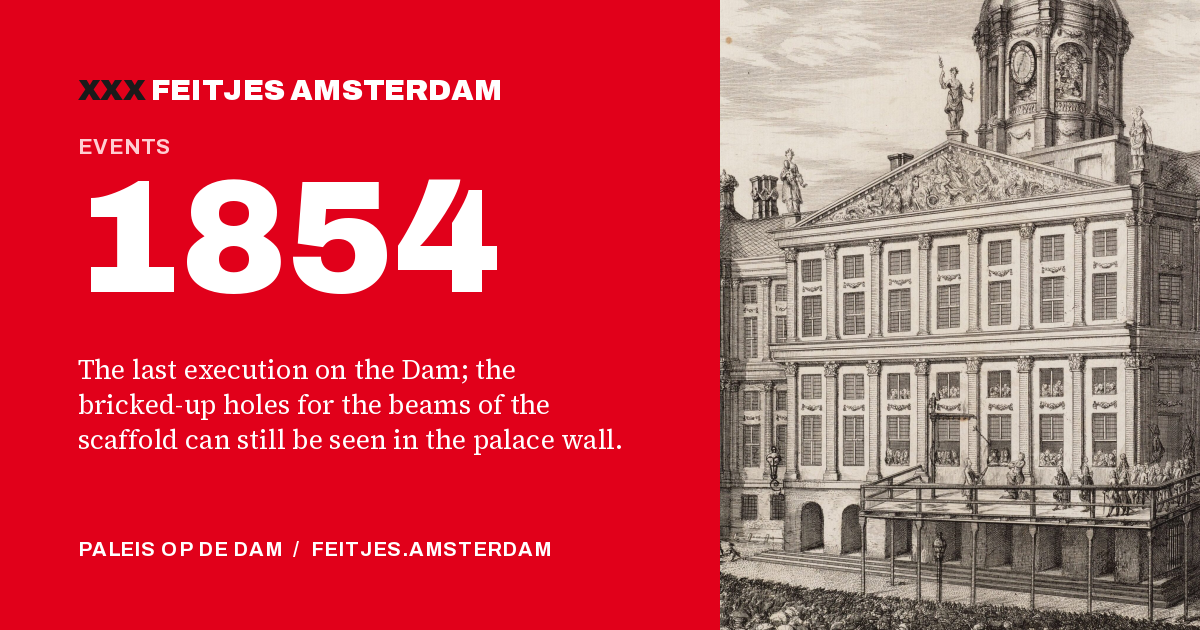
The day of the execution began in the Justitiekamer, the justice chamber. It was not only the scene of these final moments, but also the place where a striking ritual took place. Before the condemned stepped onto the scaffold, the mayors, the public prosecutor and the judges (at the time called the schout and the schepenen) knelt on velvet cushions around the coat of arms of Amsterdam. The condemned himself knelt on the cold marble floor, in the company of a preacher who said the final prayer. From a window in the Justitiekamer they then stepped out onto the scaffold, where the sentence was carried out. That could be by beheading, breaking on the wheel or hanging.
All things come to an end
The last execution on the Dam took place on 22 November 1854, after corporal punishment and the 'scherp examen' had already been abolished. Since 1808 the former town hall had been converted into the Palace on the Dam and no longer played any part in the judicial process. The Justitiekamer, once a room of intense grief and mortal fear, has over the centuries been transformed into a setting where almost nothing recalls its grim past. The marble floor with the symbols of justice and the executioner's swords now lies hidden beneath a thick carpet. Fancy a visit? The Palace is open for guided tours.