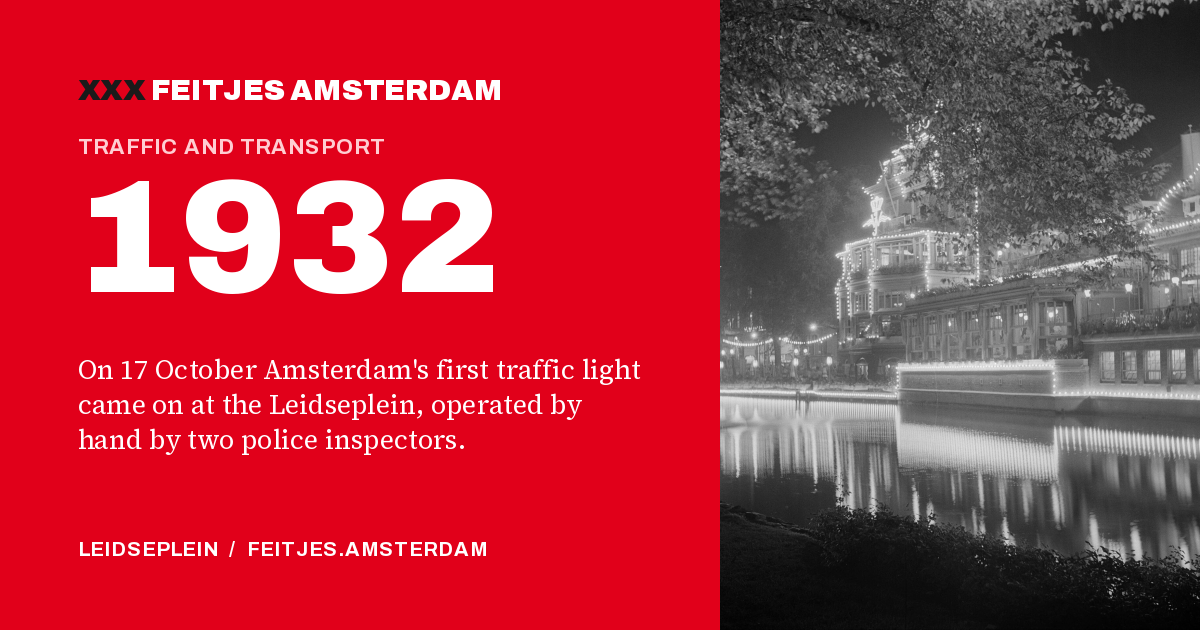
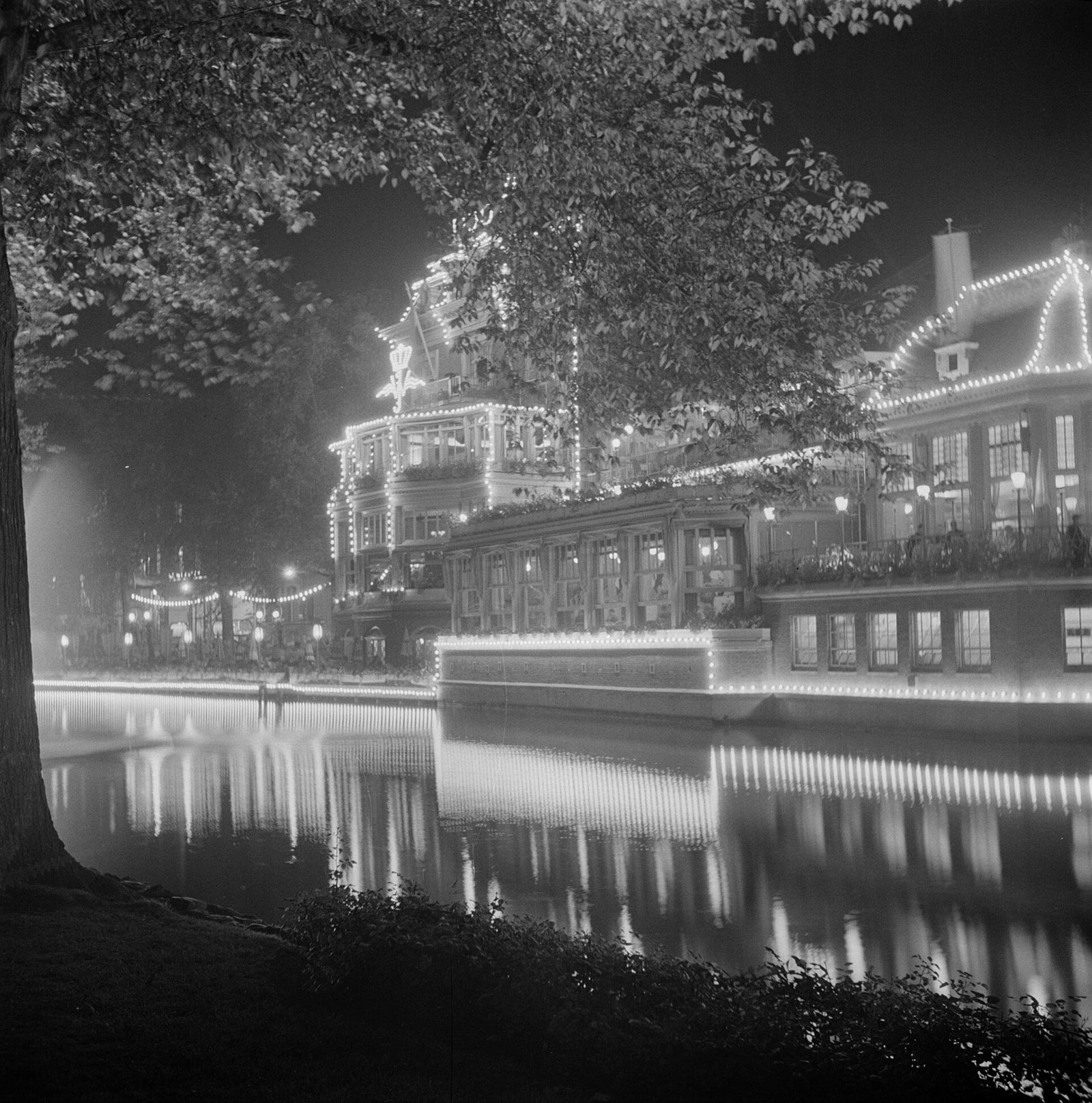
Today you wait at traffic lights at hundreds of junctions in Amsterdam. It started with one: on the Leidseplein, at the corner of the pavement by the Hirsch fashion house. On Monday morning 17 October 1932 it was switched on.
First an officer on the Dam
Before then, police officers directed traffic, if it was directed at all. In December 1912 the first traffic officer in the Netherlands, Gerrit Brinkman, started work behind the Palace on the Dam. So many people came to watch this man and his hand signals that at first he struggled to direct the traffic. Then came the stop line, a stop sign and from 1925 the klapbord, a sign reading stop on one side and go on the other that the officer could flip over.
German, and operated by hand
Amsterdam was not the first: Rotterdam, The Hague, Eindhoven, Heerlen and Breda already had traffic lights. The traffic police looked around, visited Bremen and chose a German system, designed by Hamburg engineer Paul Arnheim and made by Siemens & Halske. A Dutch alternative was rejected: it cost two and a half times as much. Questions were asked in the city council, but the choice stood.
The light had three lamps twenty centimetres across, with red at the top. Amber only came between green and red, not the other way round, with all those cyclists in mind. Nothing about it was automatic: inspectors Schotting and Cohen of the traffic police operated it by hand from a switch box. Leaflets were handed out, and on the first day officers stood by to help hesitant cyclists and drivers.
From one to hundreds
The light was a success. In 1933 lights appeared along the whole route from the Leidseplein via the Leidsestraat to the Spui, linked through the city's telephone cables. Side streets only got green when a car actually arrived, detected by rubber mats in the road. In 1934 the Amsterdam lantern became the national standard. During the war many of those rubber mats disappeared, reused as shoe soles. Only in 1947 did everything work again.
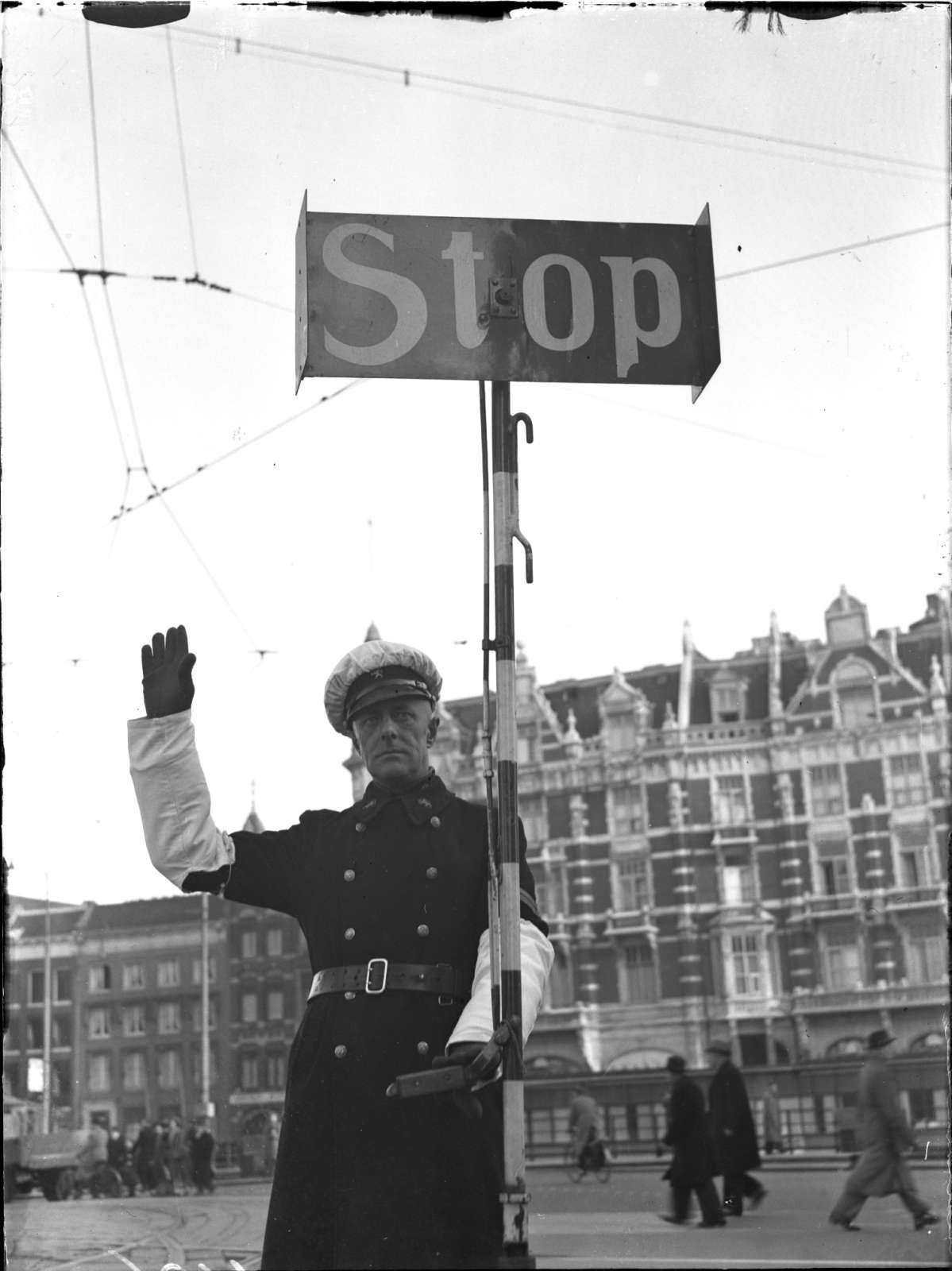
The traffic officer did not disappear straight away, by the way. With his klapbord he remained at some junctions alongside the lights until 1983. In 2014 the city counted some 350 traffic signal installations.
A green wave for cyclists
A very Amsterdam traffic light can be found on the Raadhuisstraat. Since 2007 there has been a green wave for cyclists: ride at 15 to 18 kilometres an hour and you catch one green light after another. On the Wibautstraat there is a green wave for cars instead. Plans to make all the city's lights smart were scrapped in January 2025: a trial achieved little, and there were concerns about privacy and hackers.
More traffic history? Read how you once drove through the Leidsestraat or why cycling was once banned.
- 01Amsterdam's first traffic light came on on Monday 17 October 1932, on the Leidseplein.
- 02The light was operated by hand by two inspectors of the traffic police.
- 03Amsterdam chose a German system because the Dutch alternative cost two and a half times as much.
- 04During the war the rubber detection mats of the traffic lights were reused as shoe soles.
- 05The traffic officer with his flip sign remained alongside the lights until 1983.
Sources (6)
- Sjoerd Linders, De komst van het verkeerslicht, Ons Amsterdam (2022)
- Ons Amsterdam: Rood, groen en geel
- Verkeerskunde: Stop! 100 jaar verkeer regelen in Amsterdam (2013)
- AT5: Groene golf voor fietsers in de Raadhuisstraat (2007)
- NOS: Amsterdam zet niet meer in op slimme verkeerslichten (2025)
- De Bosatlas van Amsterdam, Noordhoff (2015) (boekentip)