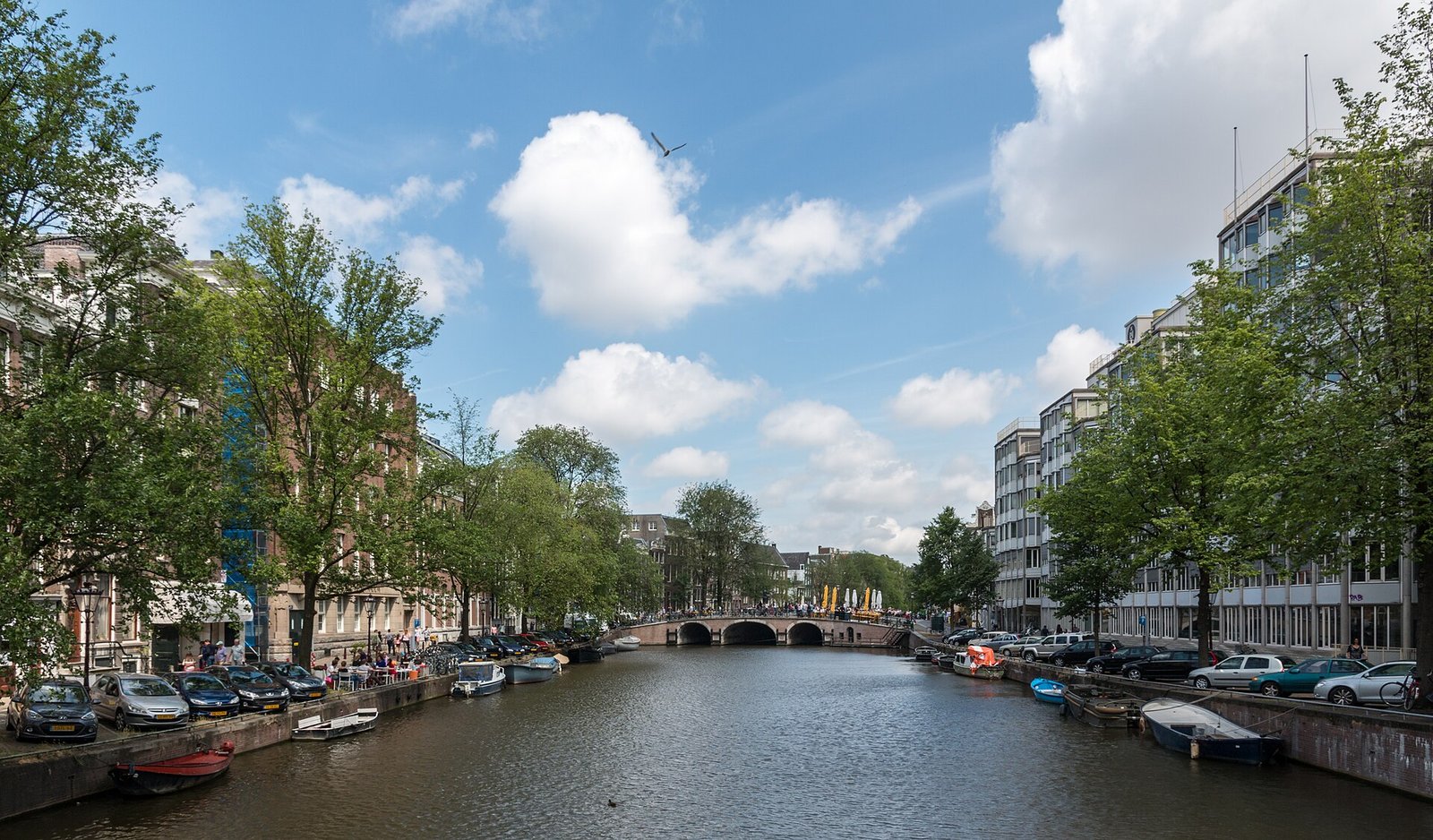
Sit on the Torensluis on a summer afternoon, a beer in hand and a view along the Singel, and you are sitting in one of the most remarkable spots in the city. Beneath that terrace are the dungeons of a tower that has not stood here for almost two hundred years.
First the gate, then the tower
Long before the canal ring, the medieval city wall ran along the Singel. Here stood one of the smaller city gates, with a narrow wooden bridge across the water. It was called the Jan Roodenpoort, after Jan Rooden, who had a ropewalk here.
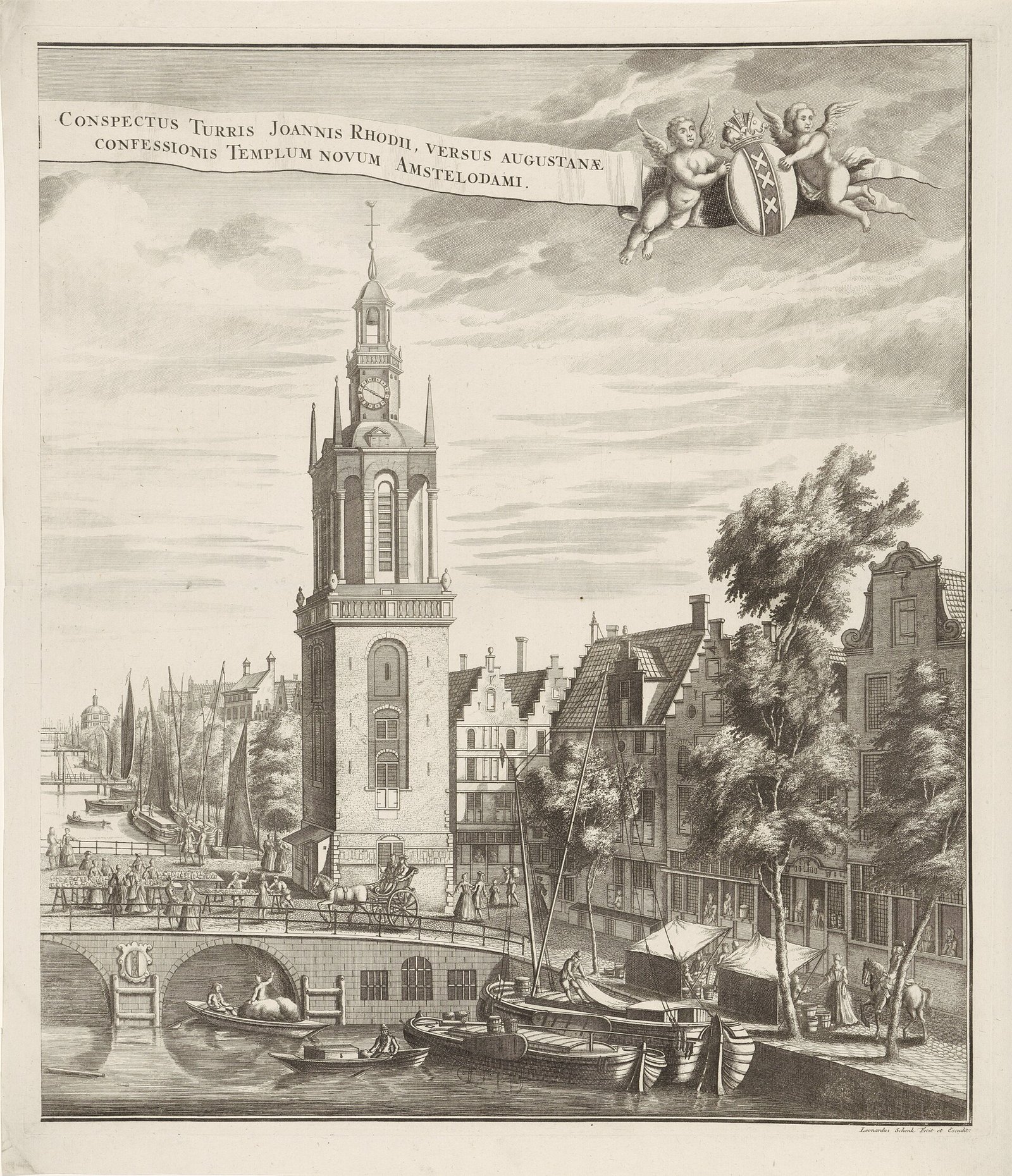
In 1616 the gate was rebuilt as a tower some 55 metres high, designed by Hendrick de Keyser, the architect of the Westerkerk. The Jan Roodenpoortstoren had a wooden spire clad in lead and from 1617 also housed the clock of the old town hall. The provost lived in the tower, and the prisoners were kept below.
A bridge 42 metres wide
In 1648 a stone bridge with a lock beneath it replaced the wooden one. It is about 42 metres wide, making the Torensluis the widest bridge in Amsterdam. Traffic passed on either side of the tower, and the bridge also served as a market square. There were even plans for shops on the bridge to pay for its construction, but they were dropped because too much traffic was expected. The bridge is considered one of the oldest surviving bridges in the city. It is bridge number 9.
Stormed, rotten and demolished
The prison in the tower had such a bad name during the French period that an angry crowd stormed the tower in 1814 to free the prisoners. After that it went downhill fast. A corner post of the spire rotted, the spire began to lean and the city had no money for repairs. In 1829 the tower was demolished.
Before the demolition, city architect Abraham van der Hart carefully measured the tower. His drawings survive, so in theory the tower could one day be rebuilt. Several attempts have been made to persuade the city, so far without success. Next time you are there, look down: since 2003 the outline of the tower has been marked in lighter bricks in the paving.
The dungeons under the bridge
The tower disappeared, the cellars remained. You can still see the entrance and barred windows of the old prison from the water. Tall tales circulate about these dungeons. Pirates were supposedly held here, prisoners were said to be deliberately visible to passing ships as a warning, and there was allegedly a listening post here during the Cold War. We found no reliable source for any of these stories. They are good stories, though.
What we do know: after a restoration the cellars were used for exhibitions, debates and fashion shows, and around 2010 a jazz club called Brug9 was based here. When it closed and the space stood empty, students from the Spinhuis Collectief squatted the dungeons in September 2015. They wanted to turn it into a study café.
Multatuli on the bridge
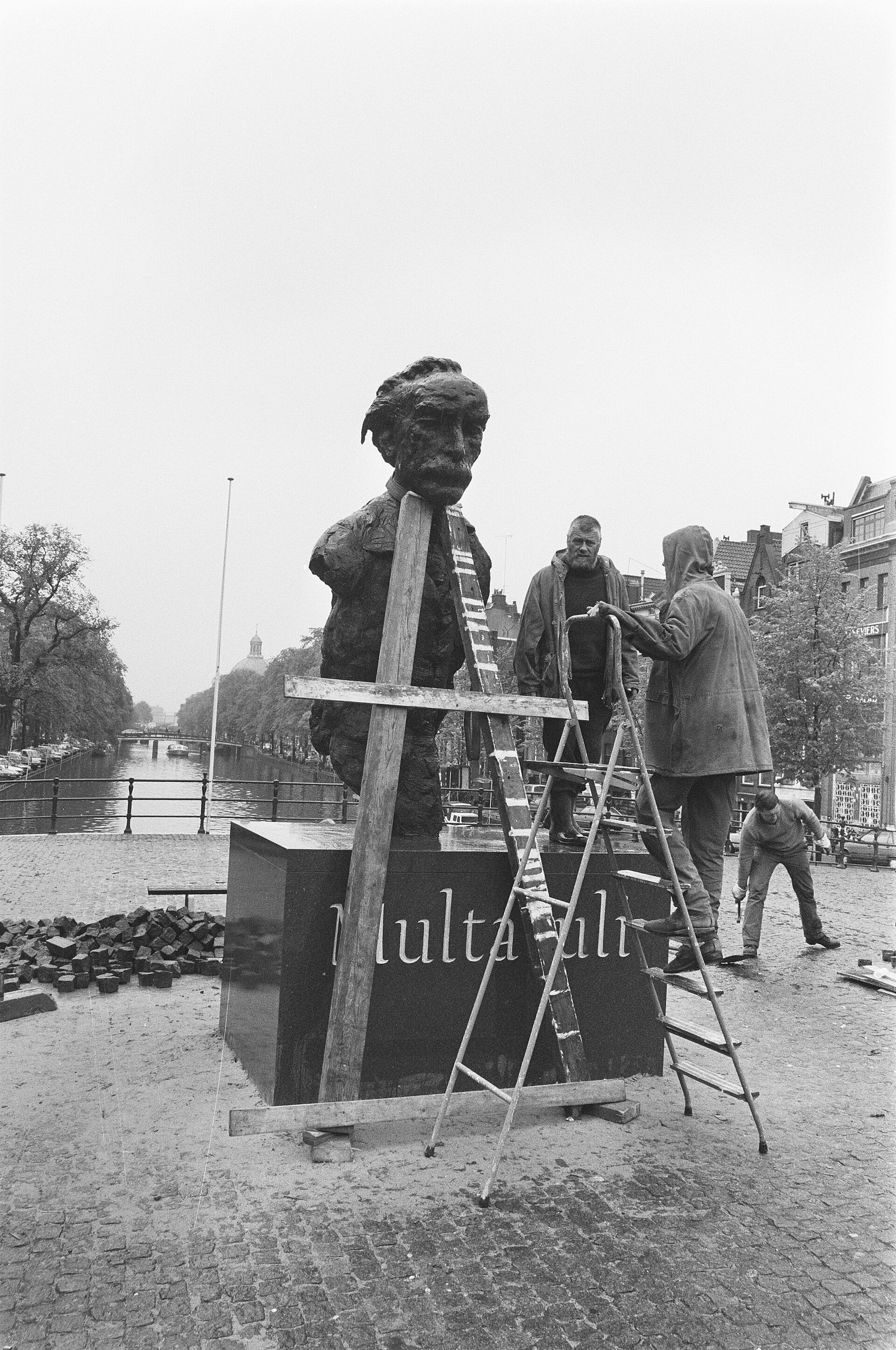
Since 1987 a bronze bust of Multatuli has watched over the bridge. It was made by Hans Bayens and placed a hundred years after the writer's death. Under the pen name Multatuli, Eduard Douwes Dekker wrote Max Havelaar, an indictment of exploitation in the Dutch East Indies. A few streets away, at Lauriergracht 37, lived the book's fictional coffee broker Batavus Droogstoppel. A gable stone reading Last & Co. recalls him there.
- 01The Torensluis is about 42 metres wide, the widest bridge in Amsterdam.
- 02The Jan Roodenpoortstoren was built in 1616 to a design by Hendrick de Keyser.
- 03In 1814 an angry crowd stormed the tower to free the prisoners.
- 04Since 2003 the outline of the lost tower has been marked in the paving.
- 05In September 2015 students squatted the dungeons under the bridge.
Sources (10)
- M for Amsterdam: Torensluis
- Geocaching: Torensluis (geschiedenis en Abraham van der Hart)
- Rijksmuseum: de Jan Roodenpoortstoren
- Wikipedia: Singel
- Amsterdamian: Torensluis, brug 9
- Talking Statues: Multatuli
- Wikipedia: Lauriergracht
- Open Nieuwsbank: b9 jazz in brug9 (2010)
- NL Times: studenten kraken kerker onder de Torensluis (2015)
- I amsterdam: Van Zuylen