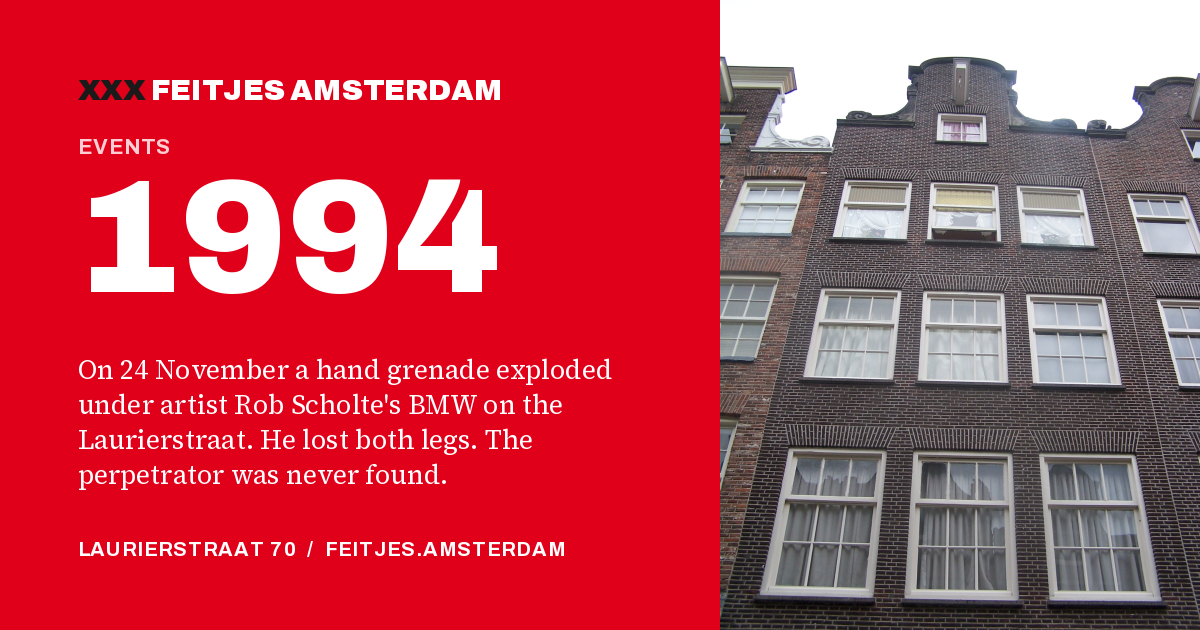
In the early 1990s Rob Scholte was the star of Dutch art. Born in Amsterdam in 1958 and trained at the Rietveld Academy, he became famous for repainting images from advertising, comics and art history: originality, he argued, was an illusion. He showed at documenta in Kassel, designed the Dutch pavilion at the 1990 Venice Biennale and was a guest on the VPRO's Zomergasten that year. In 1994 he married actress and presenter Micky Hoogendijk, and was working on a huge ceiling painting in a replica of the Huis ten Bosch palace in Japan.
Thursday 24 November 1994
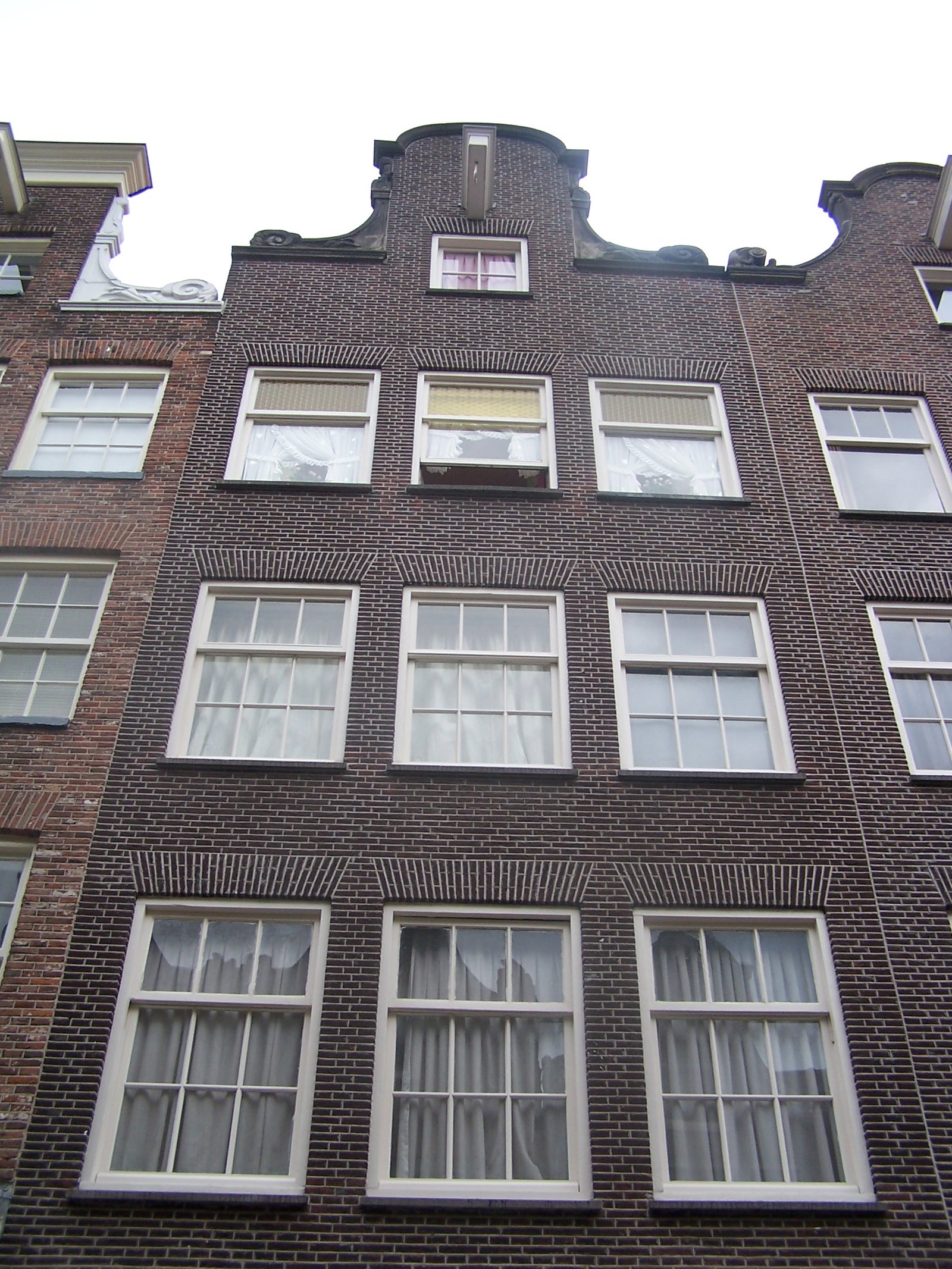
Scholte and Hoogendijk lived and worked on the Laurierstraat in the Jordaan, at number 70, with the studio upstairs. On Thursday morning 24 November they came back from breakfast and got into Scholte's dark blue BMW, parked outside. They had driven only about fifty metres, to the corner with the Eerste Laurierdwarsstraat, when a hand grenade exploded under the car.
Scholte was taken to hospital seriously injured; both his legs had to be amputated. Hoogendijk survived the attack. That something like this could happen in a quiet Jordaan street, in broad daylight, with a hand grenade, made the attack incomprehensible to the whole country.
Who, and why?
All kinds of theories soon did the rounds, from a settling of scores in the art world to a mistake. The best known is the latter: a lawyer with the same type of BMW and an almost identical number plate also parked nearby. Was the bomb really meant for him? That mix-up has never been established. None of the theories has ever been proven and no one was ever convicted of the attack.
Afterwards
Scholte and Hoogendijk lived for a while under a false name and with protection, then left for Tenerife. They separated in 1997. Scholte kept working. Later he set up the Rob Scholte Museum in an old post office in Den Helder, which was cleared in 2018 after a long dispute with the town. Twenty-five years after the attack, Micky Hoogendijk wrote that she would always keep hoping someone would one day come forward.
Nothing on the Laurierstraat recalls that morning. On the corner where the car exploded, the chess café De Laurierboom is still in business.
More Jordaan? Read about the Kees de jongen bridge.

- 01The bomb only went off after about fifty metres, at the corner by chess café De Laurierboom.
- 02The wreck of the BMW was exhibited in January 1995 at Arti et Amicitiae on the Rokin.
- 03Scholte was working on a ceiling painting of some 1,200 square metres in a replica of the Huis ten Bosch palace in Japan.
- 04In 1990 Scholte designed the Dutch pavilion at the Venice Biennale.
- 05In 2005 a whole book appeared about the case: Bom in de Laurierstraat, by crime journalist Hendrik Jan Korterink.
Sources (7)
- AT5: Aanslag op Rob Scholte in de Jordaan 25 jaar geleden (2019)
- VPRO Zomergasten: Rob Scholte
- Wikipedia (Engels): Rob Scholte
- Linda.: Micky Hoogendijk 25 jaar na de aanslag
- Hendrik Jan Korterink, Bom in de Laurierstraat (2005)
- Rechtspraak.nl: gerechtshof Amsterdam over het Rob Scholte Museum (2022)
- Peter-Paul de Baar en Peter de Brock, Hier gebeurde het (boekentip)