The birth of Chinatown in Amsterdam
The first Chinese migrants came to Amsterdam as early as around 1911. They mainly worked as sailors on steamships and later in the port. When work became scarce, some of them started small eateries and boarding houses, mainly around the Zeedijk and the Geldersekade.
After the Second World War, the Chinese community continued to grow, partly through arrivals from Hong Kong and Suriname. In the 1970s and 1980s, when the neighbourhood was struggling with drug problems and empty buildings, Chinese entrepreneurs breathed new life into it with restaurants, supermarkets and cultural institutions. Step by step, an authentic slice of Chinatown emerged in the heart of Amsterdam.
A tribute to the Chinese Amsterdammers
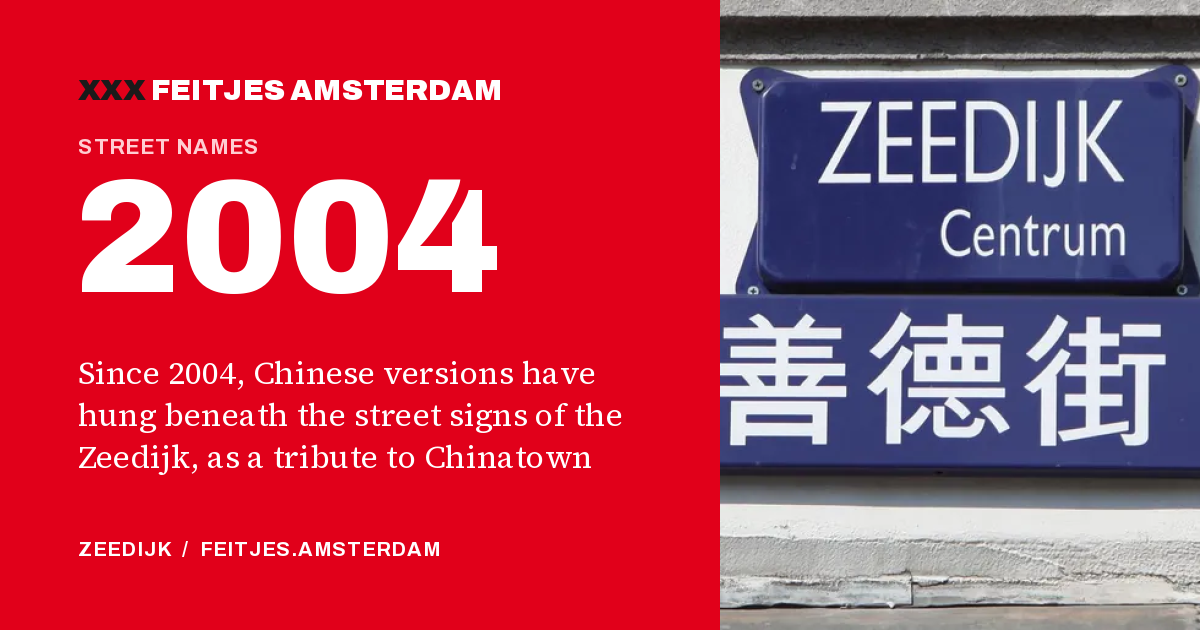
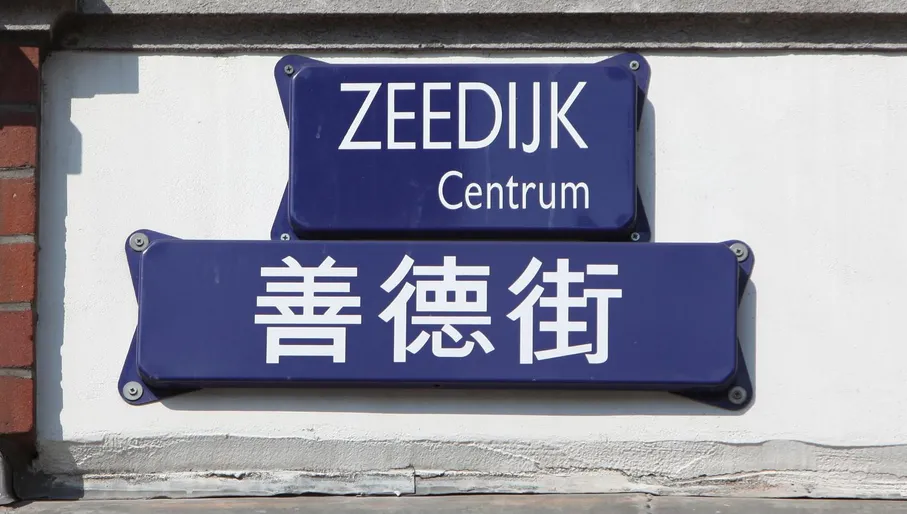
In 2004 the city council of Amsterdam decided to acknowledge this rich history visually as well. On the initiative of the Chinatown business association and with the support of the Centrum district, Chinese versions were added beneath the existing street signs.
Not as a tourist gimmick, but as an official tribute to the Chinese community that has shaped and enriched the neighbourhood for decades. Since then you can see these special bilingual signs in places such as the Zeedijk, Stormsteeg and Geldersekade.
Not just any translation
What many people don't know: the Chinese street names were not translated word for word. In some cases a phonetic rendering was chosen (how the name sounds in Dutch), in others a meaningful interpretation.
\According to local guides, the Chinese characters on the Zeedijk sign refer to protection against the water. That makes a subtle reference to the street's original function as a sea wall. However, no official translation notes on this are publicly known, so our editors could not verify it as fact. We do have to mention that, when our site is called feitjes.amsterdam...
Zeedijk: more than just pubs and prawn crackers
Today many Amsterdammers know the Zeedijk as a lively street full of pubs, toko's (Asian grocery shops), trendy cafés and the iconic Buddhist temple Fo Guang Shan He Hua. Yet beneath that liveliness the history remains tangible: a neighbourhood that was always changing, but in which every new community left its own mark.
The bilingual street signs are small but powerful reminders of that dynamic, and an invitation to take a good look around you the next time you walk through the Nieuwmarkt area.