Stop and shop
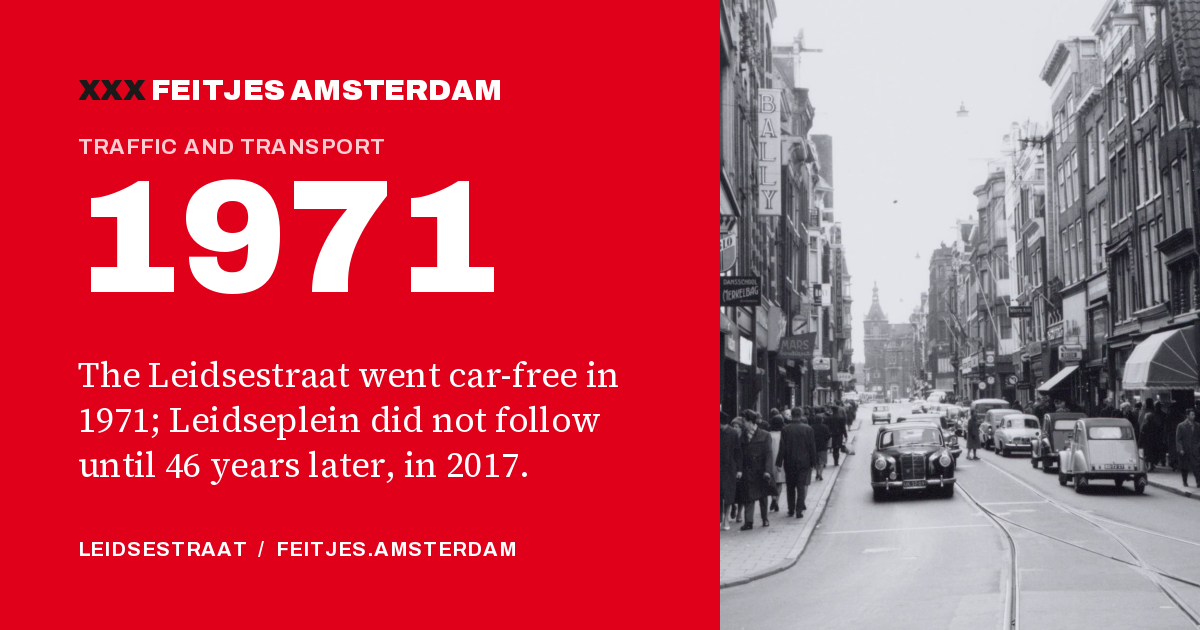
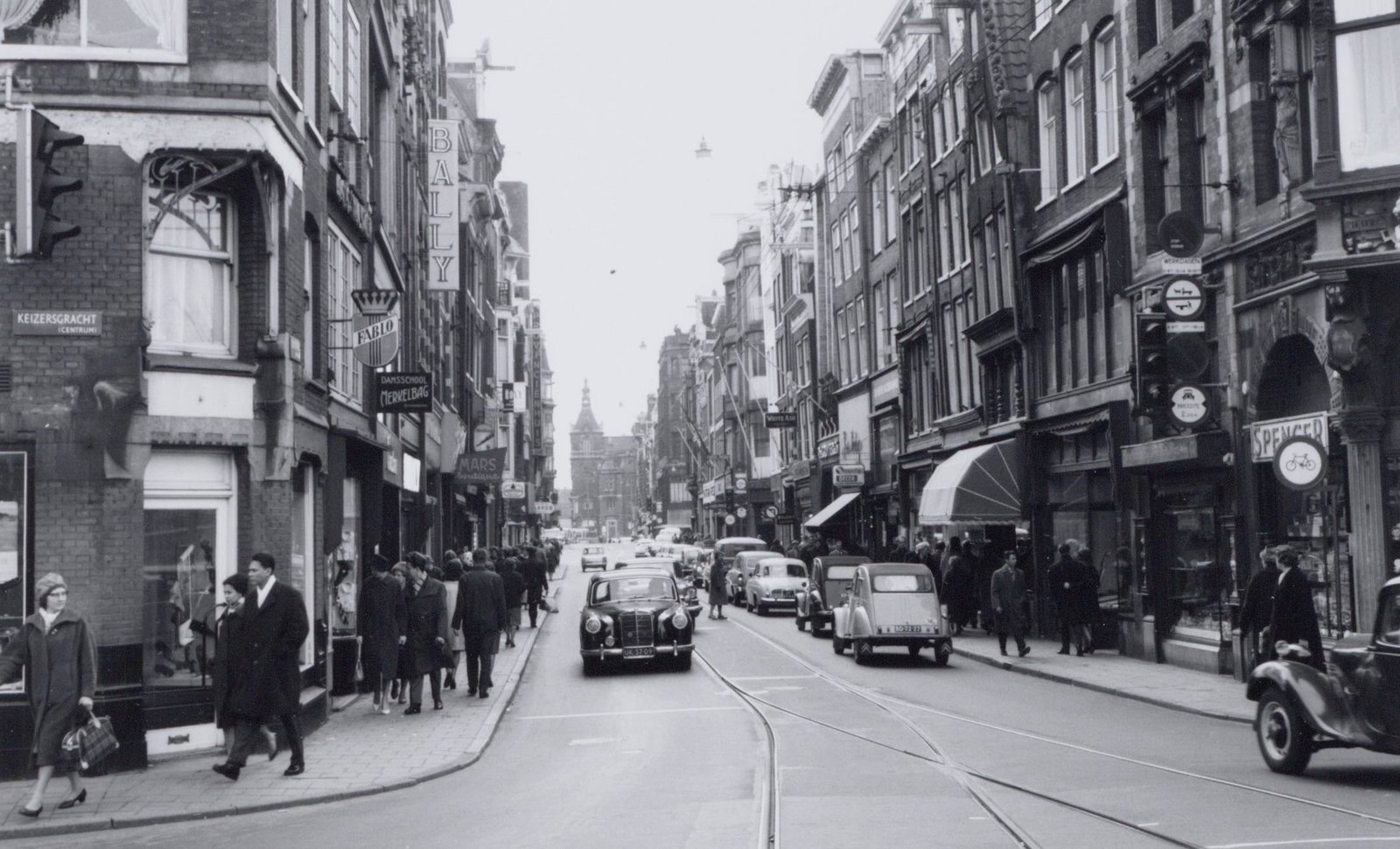
Apart from a few chain stores, the Leidsestraat today is a collection of little cheese shops and fast-food restaurants. In the 1960s and 70s, though, things were rather different. Back then it was home to renowned businesses where you could park right outside the door to do your shopping. A good example was the menswear shop DIK on the corner of the Kerkstraat, which the newspaper Het Parool called one of Amsterdam's temples of men's fashion. The street going car-free proved to be the death blow for its owner: his customers liked to park outside the door and had no intention of taking the tram. In the very year the street became car-free, he closed his doors. Today the fashion chain Ted Baker occupies the building.
Car-free: a blessing or not?
Besides the Leidsestraat, the Kalverstraat and the Heiligeweg also went car-free at some point. Whether it ultimately turned out to be a good thing for the street is something you can look at from different angles. For Amsterdammers, the street has perhaps become less interesting over the years, unlike streets such as the Utrechtsestraat or the Haarlemmerstraat, where cars still drive. On the other hand, the intensity of traffic has also increased considerably, and car traffic in the Kalverstraat, for example, would have caused considerable chaos.
- 01Funny to know: the Leidsestraat became off-limits to cars in 1971, but cyclists were banned from the street much earlier. From the early 1960s they already had to use the Nieuwe Spiegelstraat, for example, instead.
- 02Not until 46 years after the Leidsestraat went car-free did Leidseplein finally follow suit, in 2017. This had been discussed many times in the city council, and the redesign of the square proved a good opportunity. Among other things, the famous taxi rank disappeared from the square.