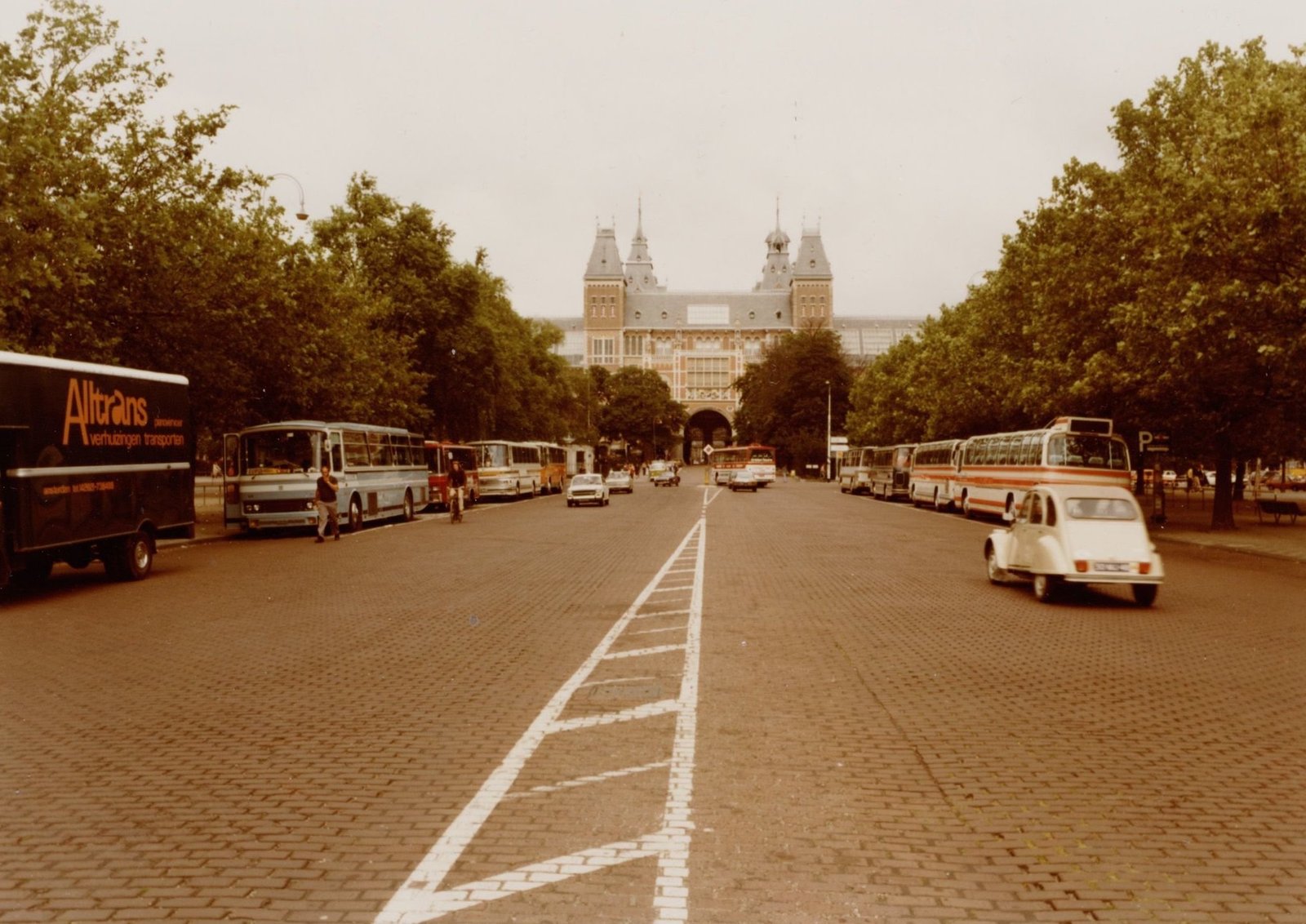
Tearing over the cobbles
It must have been a delight for car owners: racing over the cobbles of a 20 metre wide road with the Rijksmuseum on the horizon. On this stretch of almost half a kilometre there was, of course, a speed limit of 50 km/h, but plenty of drivers struggled to keep the needle below this limit, which is already high by today's standards. So it is no wonder the stretch of road became known in popular speech as 'The shortest motorway in the Netherlands'. A dream for the car owner, then, but on the other hand downright dangerous for the unsuspecting tourist on foot. Just try crossing those 20 metres of road on foot with cars racing past...
Bye bye road
On 17 April 1997 the Museumstraat came to an end when the redevelopment of the Museumplein began. For years it had been talked about, squabbled over and fought out in court, but the plan by the Danish architect Sven-Ingvar Andersson finally put an end to the racetrack for real. It was also the starting signal for the construction of an underground car park for both cars and tourist coaches, and for the expansion of several museums on the square. Those coaches had, after all, caused quite a bit of irritation in the preceding years as well. From then on cars and coaches found their place beneath the square, and above it no more metal but plenty of greenery, a pond, a pavilion and a promenade.
