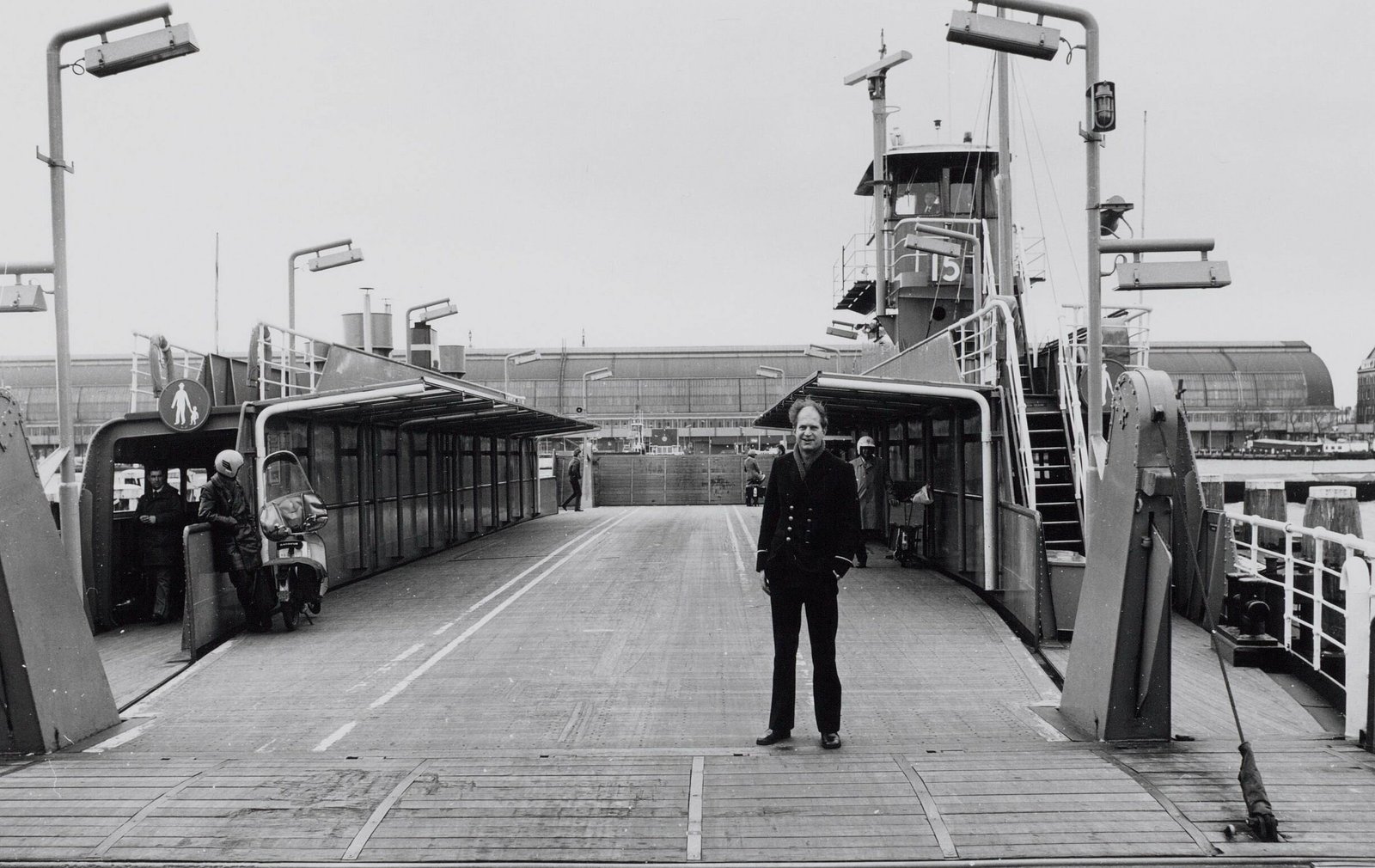
More than 700 years of ferry connections
The Buiksloterveer is probably one of the oldest ferry connections in our country. It was already mentioned around 1300, but may be even older. The Tolhuis (toll house), which you still find in Noord when you take the Buiksloterveer, dates from 1660, when the ferry was moved to the Volewijck, which by then belonged to Amsterdam.
Free crossing, please
The first request for a free crossing came as early as 1877. It was not only the residents of Noord, 'the people from across the water', who were in favour of abolishing the toll. Other Amsterdammers also thought a free crossing was a good idea to give industry and housing construction a boost. But there were concerns too: once the ferry is free, all sorts of young people will no doubt use the ferry as a 'hangout' and a kind of 'pleasure cruising' will develop, a few council members suspected.
And then the ferry was free
After much deliberation, a majority of council members were ultimately in favour of abolishing paid ferry services. In May 1912 the crossing became free and it has remained so to this day. For vehicles the ferry has also been free (again) since 2007. A lot has of course changed since 1912: various connections were discontinued, usually because of the arrival of a bridge, but sometimes also because other means of transport came along. The Buiksloterveer is still there, though, despite many plans for the 'leap across the IJ'.
