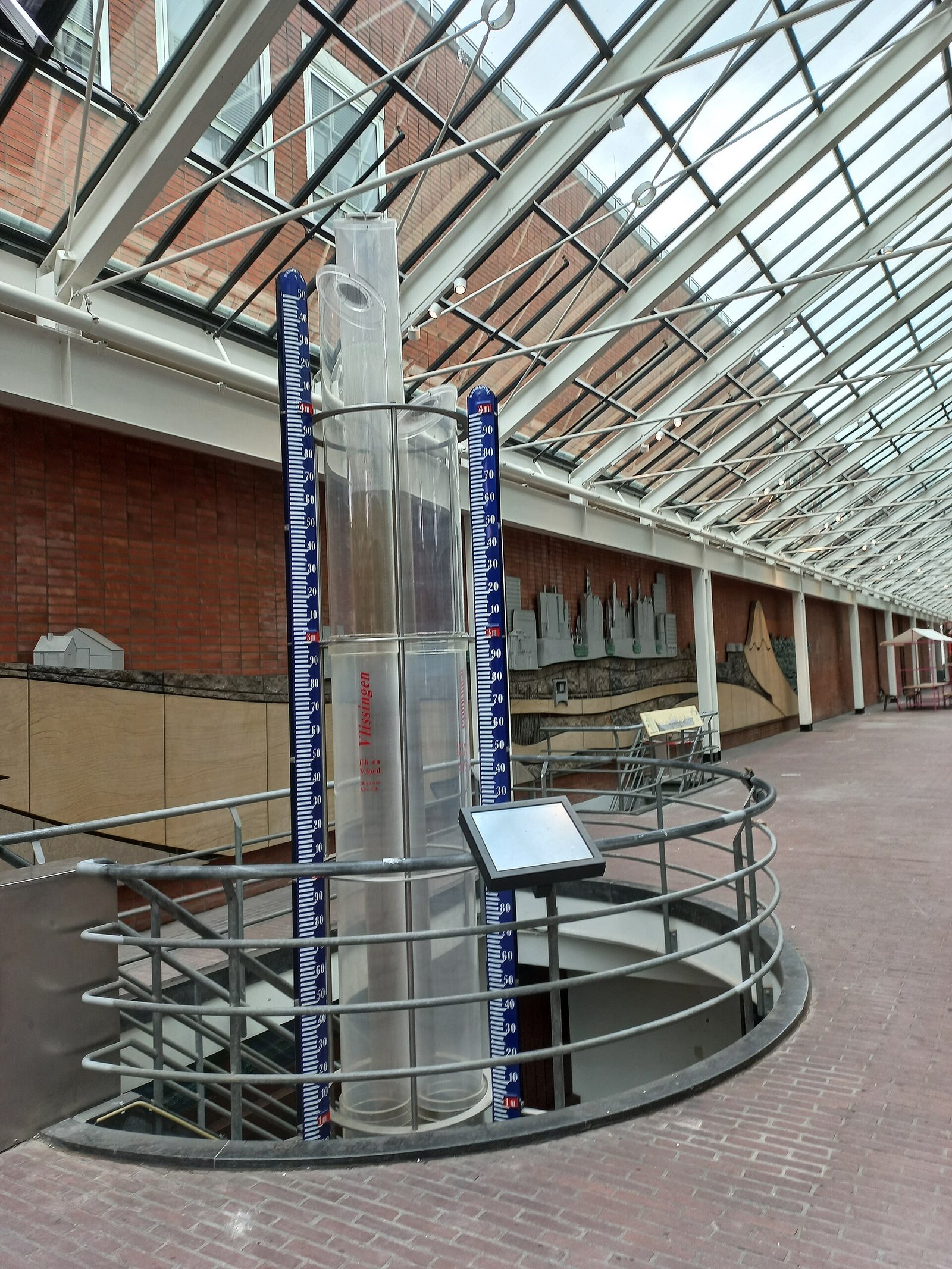
Every height in the Netherlands is measured against NAP: the dyke near your grandmother's house, the country's highest hill, the floor of Schiphol airport. Many people think its zero point is in the Stopera, the city hall and opera house, because that is where a shiny bolt sits with a sign next to it. That bolt is mainly for visitors. The country's real reference point lies a few hundred metres away, under the paving of Dam Square.
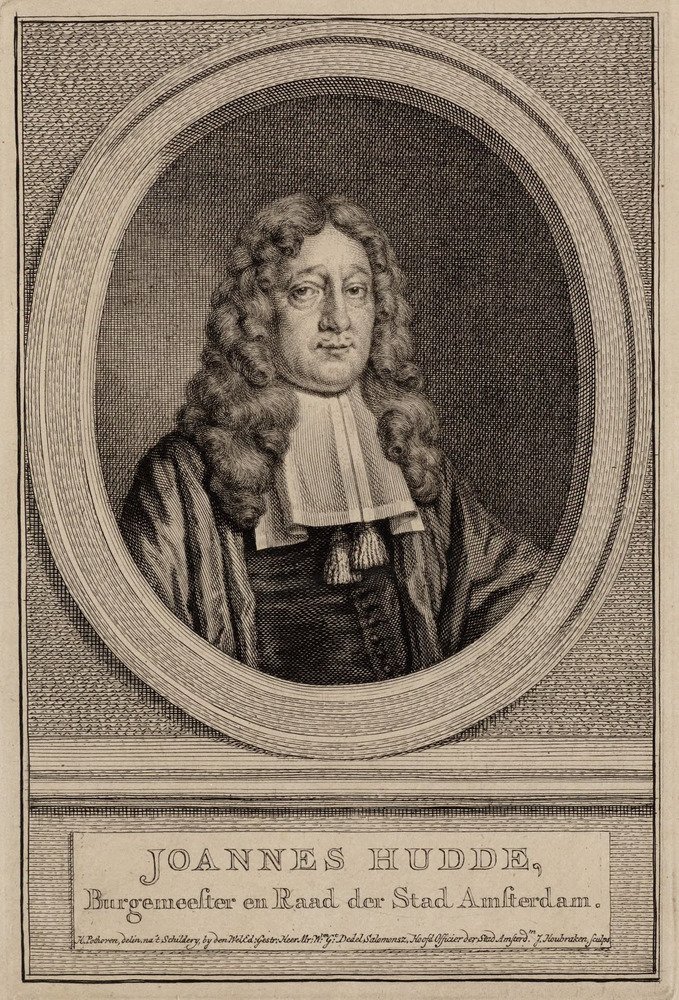
A mayor who measured the water
It started with a flood. After a flood in 1675, mayor Johannes Hudde wanted to know how high the sea dykes around the city really needed to be. From September 1683 to September 1684 he had the high water level of the IJ measured every day. The average became Amsterdam Level. The sea dyke had to be nine feet and five inches above it, about 2.67 metres.
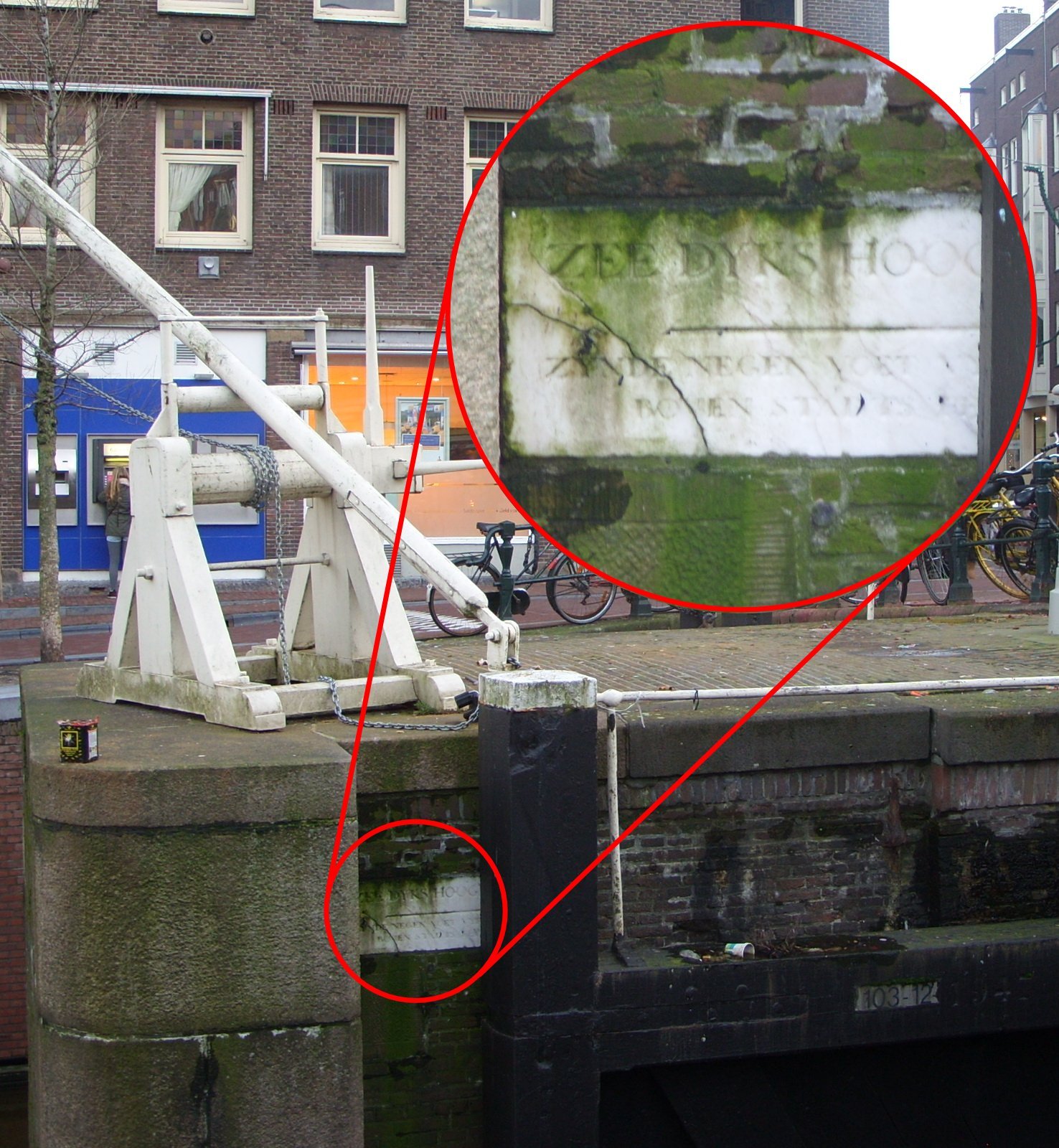
To record that level, Hudde had eight marble stones with a groove set into locks across the city, so everyone could see the zero point.
The last Hudde stone
Only one of those eight stones is still in its original place: in the Eenhoornsluis, where the Korte Prinsengracht crosses the Haarlemmerdijk. The stone and the lock became a listed monument in 2005. The stone from the Nieuwe Brugsluis disappeared in 1955 when that lock was demolished, and turned up again in 2014 during construction of the North/South metro line. It has since been restored.
From Amsterdam to all of Europe
The Amsterdam level proved so useful that it was prescribed for the whole country in 1818. Since 1891 it has been called Normaal Amsterdams Peil, or Amsterdam Ordnance Datum. Belgians and Germans adopted it too: Prussia based its own zero point on it in 1879, and today NAP is the basis of the European height system. A measurement by a few Amsterdam officials in the seventeenth century has become the basis for heights across much of Europe.
Ninety centimetres under Dam Square
Hudde's stones sat in locks and quay walls, and those sink and shift. So in 1953 a new reference point was made: a bronze bolt on a 22 metre wooden pile, under Dam Square. The bolt sits about ninety centimetres below the paving, under a lid of bluestone. It is not at zero but slightly above: 1.408 metres above NAP. From that bolt the height of some 35,000 visible benchmarks across the country is determined, plus 400 underground ones.
And the bolt in the Stopera? It sits at exactly 0 metres NAP, but plays no role in the measurements. It is part of the NAP monument by Louis van Gasteren and Kees van der Veer, opened in 1988. The monument shows how high the water in the Netherlands can rise. In 1953, during the great North Sea flood, it reached 4.55 metres above NAP.
- 01Mayor Johannes Hudde had the high water of the IJ measured every day from September 1683 to September 1684.
- 02Of the eight Hudde stones, only one is still in its original place, in the Eenhoornsluis.
- 03Since 1891 Amsterdam Level has been called Normaal Amsterdams Peil.
- 04The reference point under Dam Square is 1.408 metres above NAP, not at zero.
- 05The NAP network has some 35,000 visible benchmarks and 400 underground ones.