The metro station's double role
You can hardly imagine it now, but during the Cold War the threat of an atomic bomb was real. To protect the population from the impact, fallout shelters were built at various places in the city. At around the same time the city council was also busy preparing the construction of the metro's Oostlijn. To save costs, a study was carried out into which stations would lend themselves to the 'double role' of station and shelter. The three new stations Wibautstraat, Weesperplein and Nieuwmarkt proved suitable, and a shelter was later built at Waterlooplein station too. That last one was connected to the city hall and was intended for the city government.
Super-fast conversion
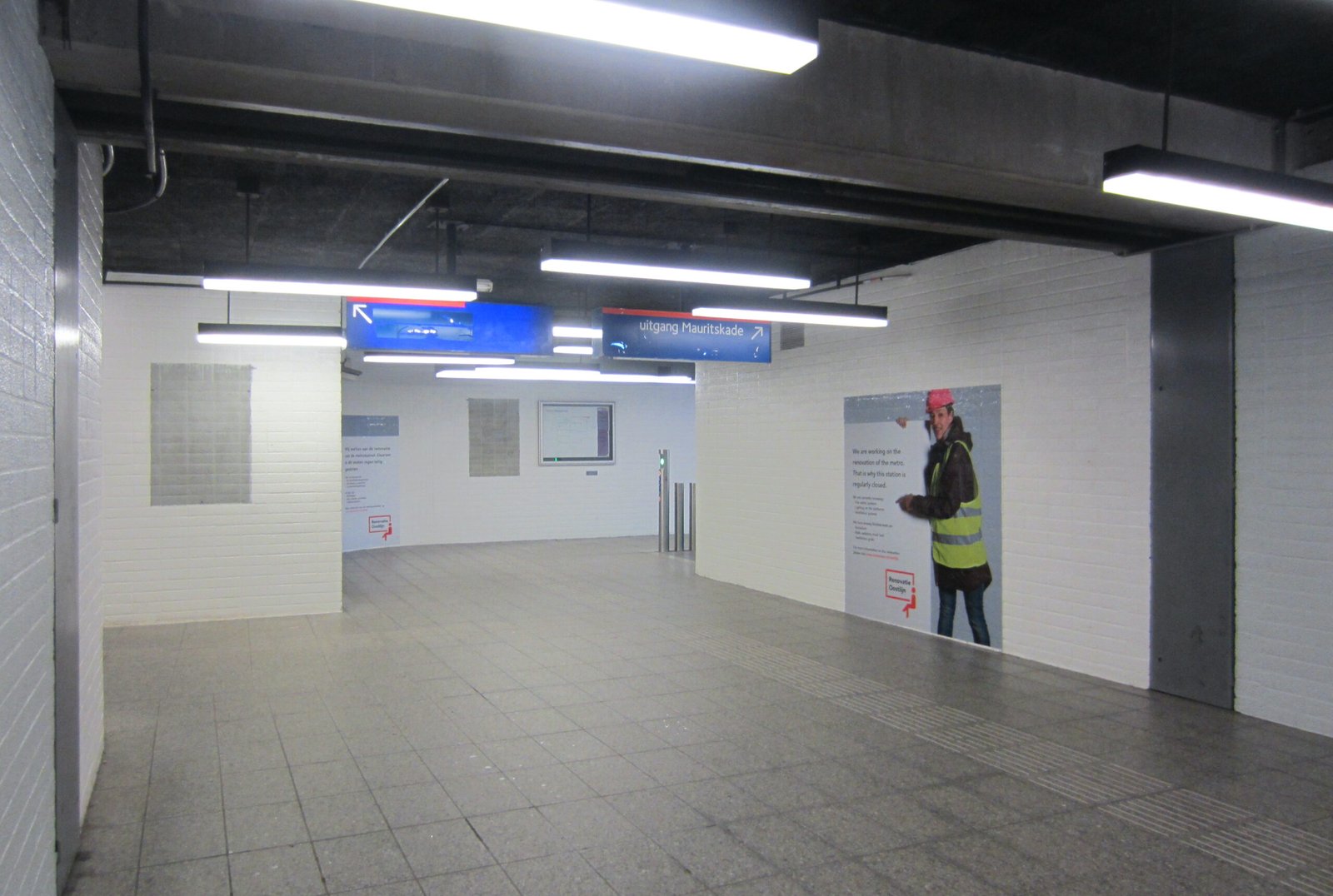
In effect the metro station itself was a large part of the bunker. Extra spaces were also built above and beside the stations. At the entrances to the stations and platforms were enormous steel doors that could seal off the station completely. In the event of a radioactive emergency the metro trains would be driven into the station to serve as a place to sleep or stay, for instance. Latecomers were thought of too: they could enter the bunker via a special intermediate space with a shower. The showers were meant to rinse off radioactive particles; clothing was not allowed in. The large doors and the point where the bunkers began can still be seen in the station: keep an eye out for them. You can recognise it both on the wall and on the ceiling.

Who were they actually for?
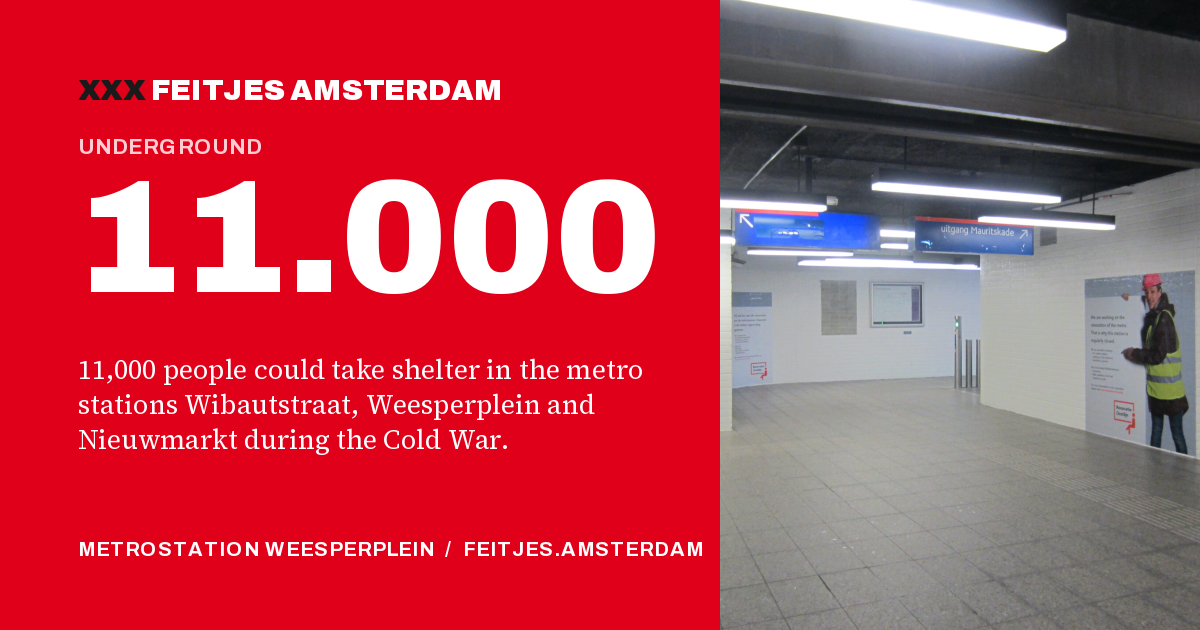
It will come as no surprise that the shelters were never used for their actual purpose. In hindsight you might even ask what those bunkers were actually good for. The capacity of the three stations together was 11,000. If you count the rest of the bunkers in Amsterdam, there was room for 36,000 people in the event of a disaster. With a population of 900,000 at the time, most citizens would therefore have missed out. Now you could argue that the bunkers were mainly intended for passers-by, but citizens did not even know the bunkers existed. Only a few local residents knew the entrances. What these bunkers were ultimately good for remains a bit of a mystery, and sometimes fuel for wild stories on the internet.
The end of the bunkers
The bunkers were maintained until 1999 so that they remained ready for use at any moment. But because there had long been no threat, the city council decided in 2004 to abolish the shelter function of the metro stations. Four years later most of the visible and invisible reminders of the bunker era had disappeared. The spaces that became available could be used, among other things, as storage for materials during the renovation of the Oostlijn and later to house improved safety installations for the metro: so after more than 50 years the spaces still serve the public interest.
- 01White panels hung from the ceiling of Weesperplein station. These were actually tables hanging upside down which, when the bunker was in use, could be used to eat at.
- 02The photos accompanying this article come from Skyscrapercity, where a user was given a tour of the Weesperplein bunker. Curious to see more photos? View them here.