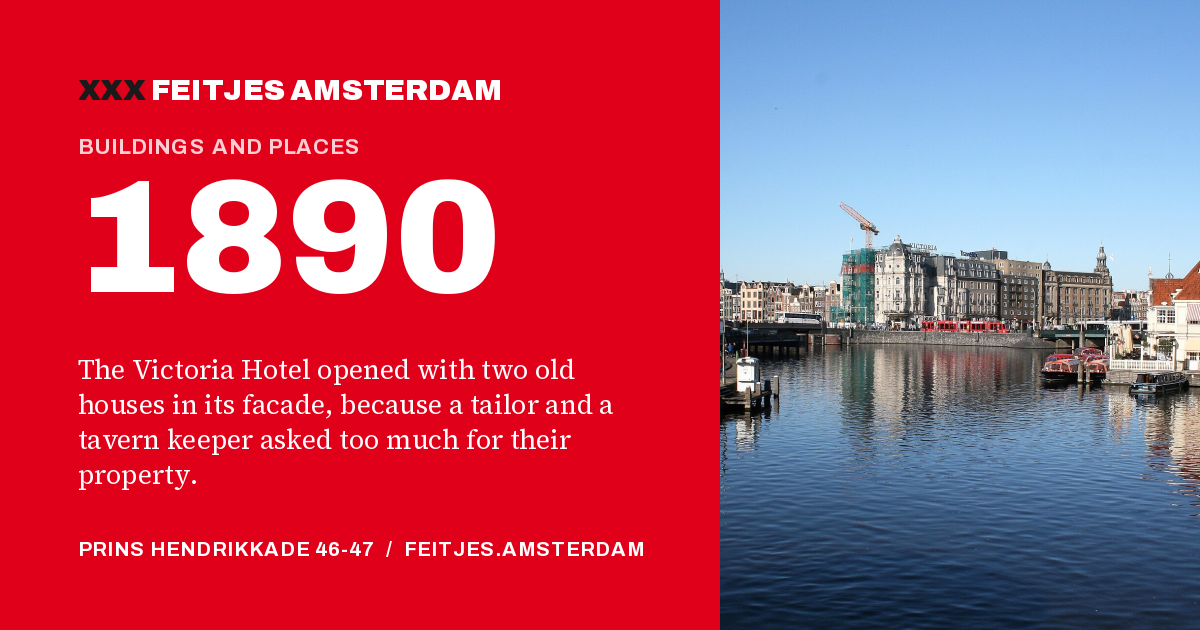
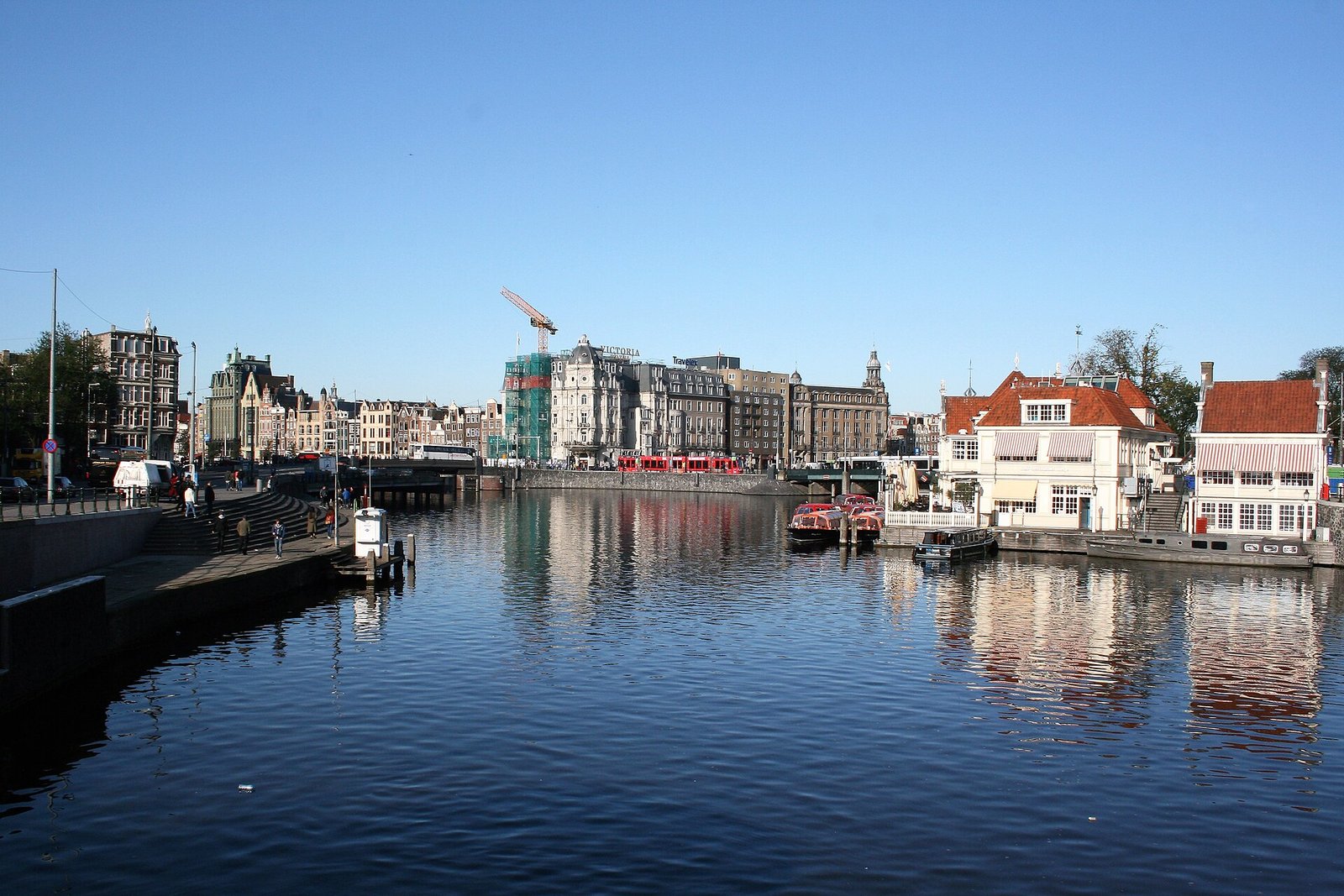
Step out of Central Station and you look straight at the Victoria Hotel: sandstone, columns, a corner tower with a dome. But walk along the Prins Hendrikkade side. In the middle of the elegant facade the building line steps back, and there they are: two narrow old houses, the left one strikingly low, the right one a little taller. They look as if they were squeezed in by accident. In a way, they were.
A hotel for the new station
In the 1880s the new Central Station rose up in the IJ. Anyone arriving there by train should immediately see a luxury hotel, thought the German architect Johann Friedrich Henkenhaf, who with his partner Ebert had just designed the Kurhaus in Scheveningen and a new hotel wing for Krasnapolsky. The hotel company was founded in 1883 with half a million guilders in capital and began buying up the houses on the corner of the Damrak and the quay.
Almost everything worked out. Five buildings on the Damrak and three on the quay were acquired. But two neighbours did not go along: tailor Pieter August Carstens, who had owned number 47 since 1865, and tavern keeper Johannes Frederik Verburgt, who had bought number 46 in 1883, the very year the plans became known.
Excessive demands
The story often goes that the two stubbornly turned down a fortune. The newspapers of the day tell it more soberly. In June 1889 the Amsterdamsche Courant reported that their properties had not been bought "because of excessive demands" and would probably be built around. So it was not they who refused a high offer: the hotel company found their asking price absurd. Henkenhaf decided to build the hotel around them instead. The recessed middle section of the quay facade, now mentioned in the listing of the national monument, is the result.
Neighbours, not guests
On 19 August 1890, ten months after the station opened, the Victoria Hotel opened with great ceremony: a hundred rooms, electric light in every room, a hydraulic lift and double windows against the noise of the quay. Carstens and Verburgt were there too, as neighbours. They will hardly have been on the guest list.
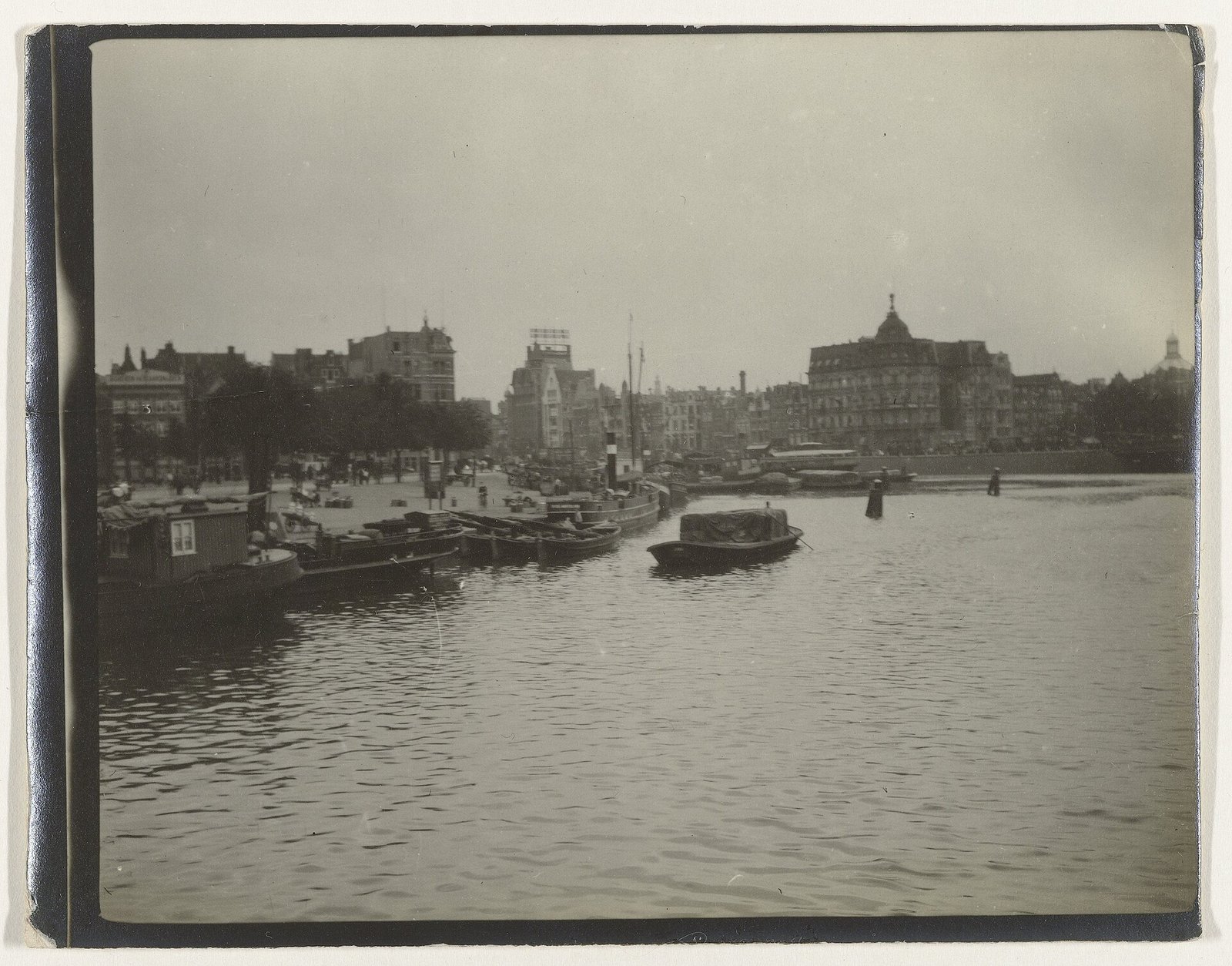
The hotel never bought the houses. Carstens sold his in 1915 for 16,000 guilders, more than five times what he had paid. Both buildings then passed to the Van den Ende family of tavern keepers, who were still there in the 1960s, with a cigar shop in one and a bar in the other. Today they house a souvenir shop. The low house, by the way, had been kept small once before: when it was built around 1600, the owner of the big house next door insisted it stay low.
Myth and novel
A story like this attracts inventions. In 1966 an English writer claimed her grandfather had refused to sell, with a neighbour asking 46,000 guilders. Historian Isabella van Eeghen went into the archives and showed that little of it was true, yet that sum still does the rounds. Thomas Rosenboom turned the story into his acclaimed novel Publieke werken (1999), about a violin maker who will not give up his house, filmed in 2015 as A Noble Intention. The main characters have other names, but Henkenhaf and Ebert appear as themselves.
More about this spot? Read where the name Damrak comes from.

- 01Tailor Carstens bought his house in 1865 for 3,105 guilders and sold it in 1915 for 16,000 guilders.
- 02The low house had already been kept small around 1600: the owner of the big house next door insisted it stay low.
- 03When it opened in 1890, the Victoria Hotel had electric light in every room, a hydraulic lift and double windows.
- 04The famous 46,000 guilders comes from an invented story of 1966, not from the archives.
- 05The hotel never managed to buy the two houses.
Sources (6)
- I.H. van Eeghen, "De huisjes in het Victoriahotel", Maandblad Amstelodamum 53 (1966)
- Rijksmonumentenregister: Victoria Hotel (518423)
- Ons Amsterdam: Hoe waar is het verhaal van Publieke werken? (2015)
- Theo Bakker: fotoquiz over de huisjes (2015)
- DBNL, Lexicon literaire werken: Publieke werken
- Peter-Paul de Baar en Peter de Brock, Hier gebeurde het (boekentip)