Building an icon
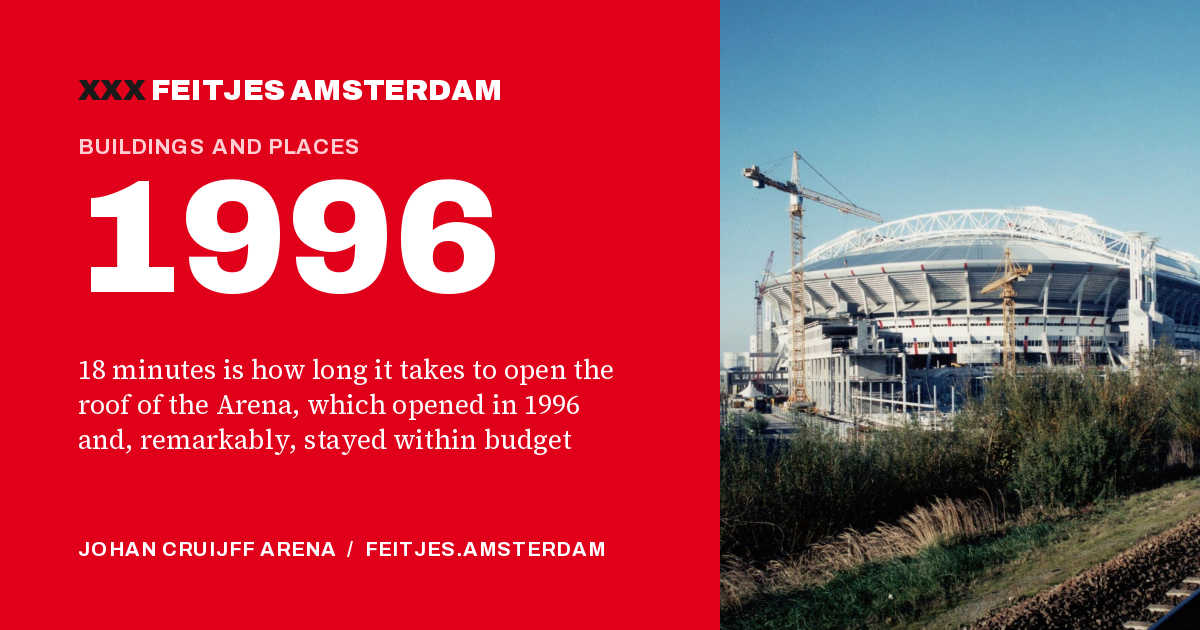
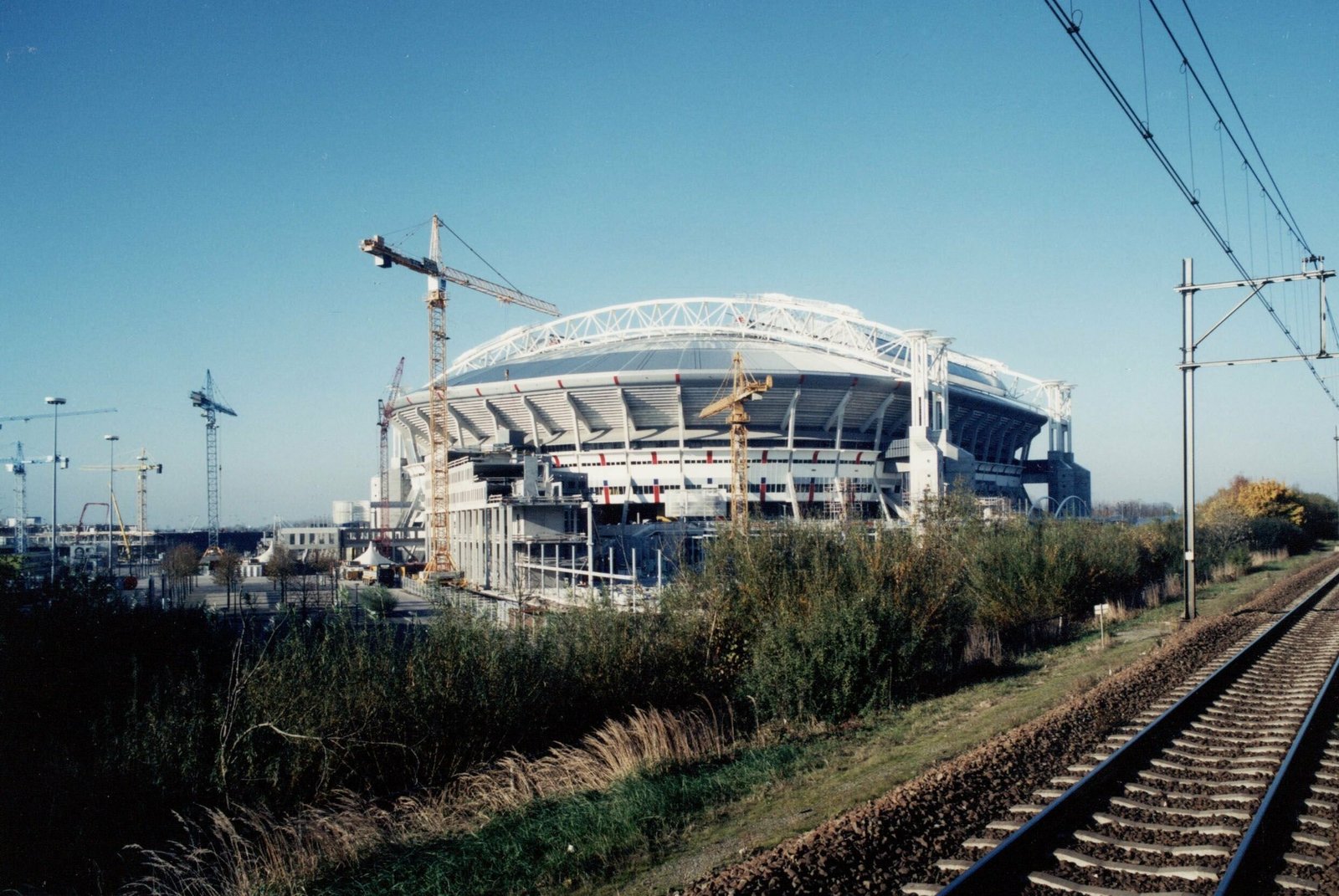
Construction of the Amsterdam Arena started in 1993 and was already completed in 1996. For its time the Arena was a striking piece of modern architecture, designed by the famous architects Rob Schuurman and Sjoerd Soeters. They aimed for an innovative design that was both functional and beautiful. The stadium was given a futuristic look with rounded shapes and a sliding roof, which makes it possible to hold events both indoors and outdoors. The roof opens and closes in 18 minutes. Soeters and Schuurman worked on the design for ten years.
Flying saucer
Schuurman uses associations in his work. The final design bears a resemblance to a flying saucer, especially when the whole thing is lit up by the artificial light of the stadium floodlights. The stairwells are connected to each other in such a way that you can make out the laces of football boots in them. On the end of the stadium there are remarkably large round holes in the stairwells, reminiscent of the game in which a ball has to be kicked through holes to score points. A nice detail: large projects in Amsterdam are known for running considerably over budget. Remarkably, however, the ArenA was delivered within budget, which is special given its size and innovation.
More than a stadium
The stadium was a first for the Netherlands, because it became a multifunctional venue, designed to be much more than just a football stadium. In addition to hosting Ajax's home matches, the Amsterdam Arena was also used for other sporting events, concerts, exhibitions and corporate gatherings. With a capacity of more than 54,000 seats it was one of the largest stadiums in Europe when it opened. The base of the stadium houses numerous shops
Johan Cruijff
Even before the stadium opened in 1996 there was already debate about naming the stadium after Johan Cruijff, the Ajax icon. The city council refused at the time, since as a rule only deceased people are honoured with a naming. After Cruijff's death in March 2016 the debate quickly flared up again, and on 25 April 2017, the day Cruijff would have turned 70, the city council, led among others by mayor Eberhard van der Laan, signed a declaration of intent for an official name change to the "Johan Cruijff ArenA". On 9 August 2017 it was announced that the name change would take place on 25 October 2017.