Milk, meat and Citroëns
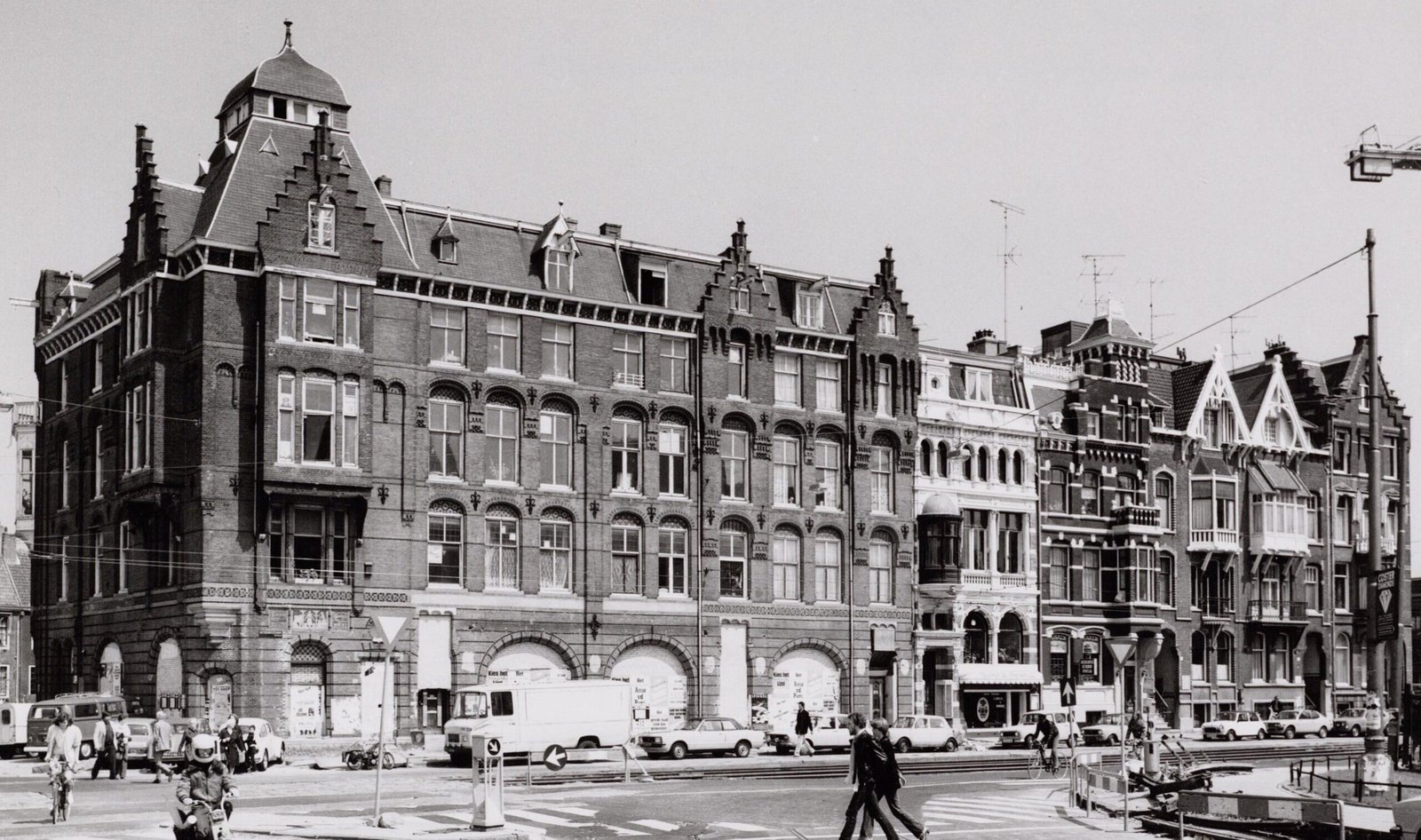
The origins of the building go back to the Onderlinge Vereeniging van Veehouders (OVV), a cattle farmers' cooperative. Farmers from the area around Badhoevedorp had a distribution centre built here in 1893 for milk and other dairy products, including kosher varieties. Architect Joseph Cuypers, son of the famous Pierre Cuypers of the Rijksmuseum across the road, was responsible for the design.
Not long afterwards, meat was added (the Maatschappij voor de Vleeschhouwerij, a butchery company) and even cars: Citroën opened a showroom on the ground floor in 1924. And so De Grote Wetering rolled from industry into comfort, with a renovation here and there. Including a chic lunchroom in 1919.
A demolition plan with obstacles in the way
In the 1970s the building fell into the hands of property dealer Gerard W. Bakker, a man with plans. He bought the building intending to demolish it and build luxury apartments. But his demolition zeal clashed with the vision of alderman Jan Schaefer, who favoured renovation and was no fan of 'soulless new builds'.
What followed was a classic Amsterdam stalemate. Bakker wanted to demolish, the city stopped him, and the building stood empty for a long time. And well, an empty building in the 1970s? That was asking for squatters...
Squatting, demolition and a Sinterklaas stunt
The squat went remarkably orderly: only the empty part was occupied, the inhabited part was left alone. When Bakker secretly started demolishing without a permit, the court had to step in: repair and habitability became the new orders.
Things grew ever grimmer. The squatters distrusted the financing through the Friesch-Groningsche Hypotheekbank, seen as an accomplice to speculation. An attempt to have the building declared a monument failed, and with that the way was clear for eviction.

On 2 December 1980 it came to a clash between squatters and the Mobiele Eenheid, the ME (riot police). The ME even sent in Sinterklaas as a peace dove, with the mitre on the wrong head, as it turned out. The squatters, generally peace-loving, eventually left the building calmly. A small gesture of great decency in a time of heated struggle.
From squat to office
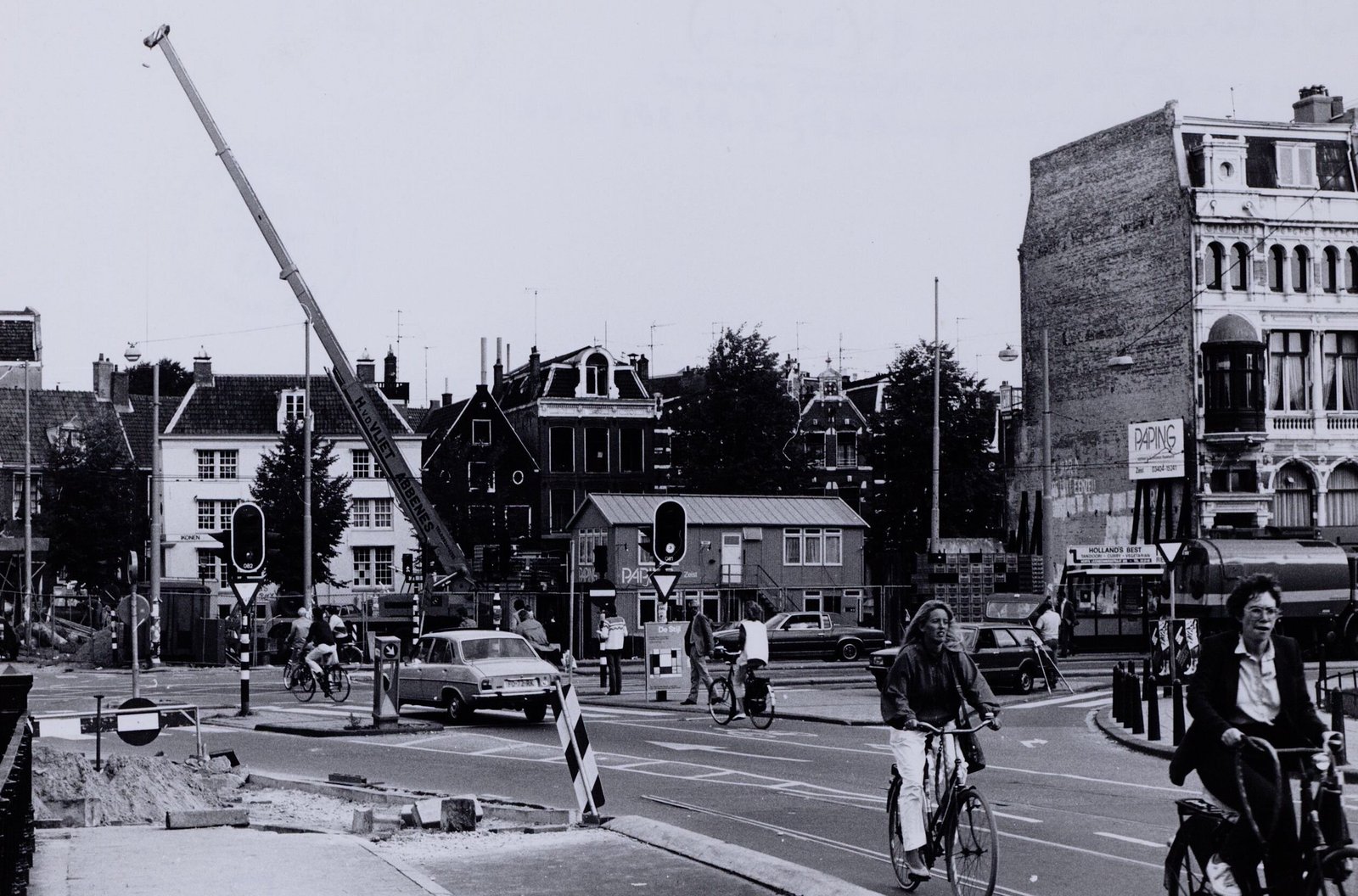
Demolition work began in 1981 and a year later Amsterdam was looking at a building pit. The new building came in 1983: a mix of shops, offices and homes. Around the same time, similar buildings appeared elsewhere, such as the nearby and much-discussed new build Peper en Zout (Pepper and Salt) by architect Frans van Gool, seen by many at the time as out of place in the historic streetscape.