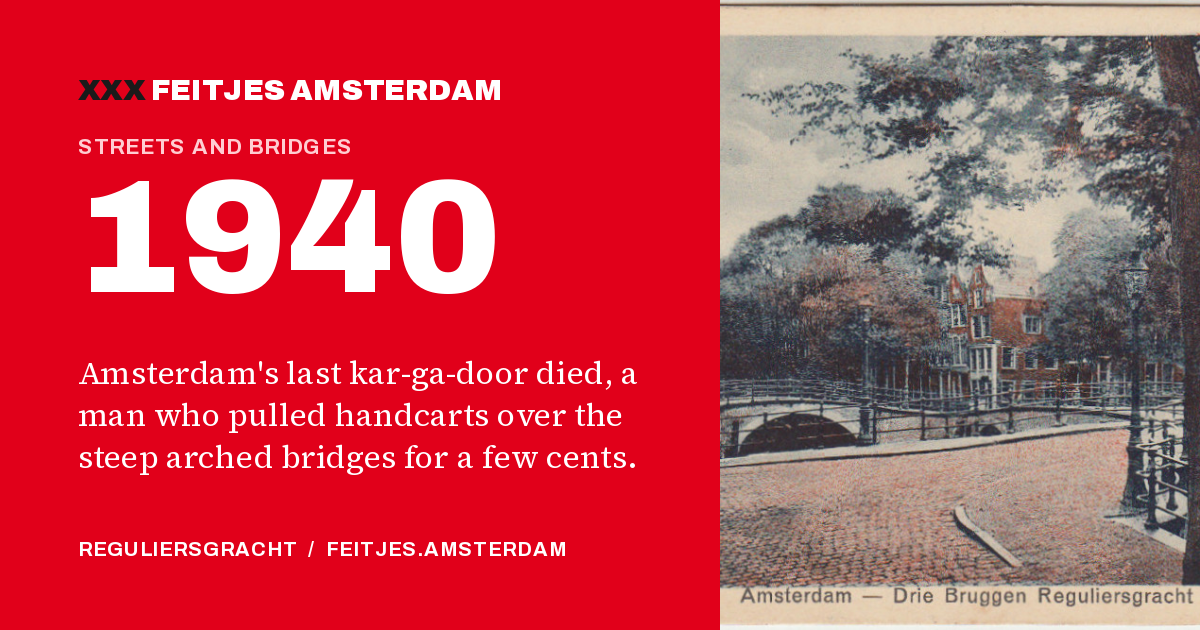
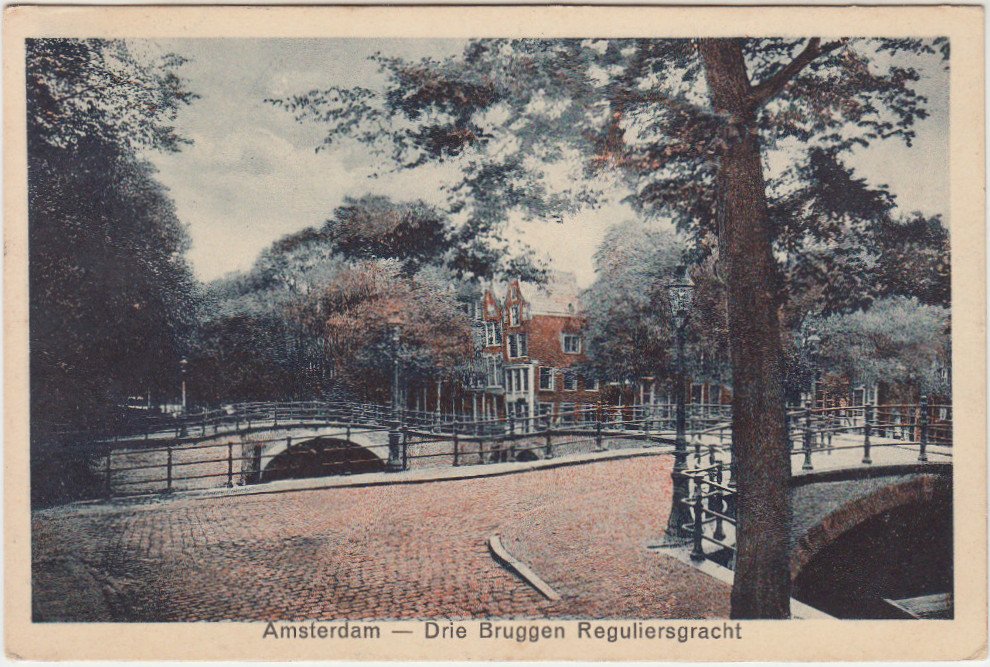
Amsterdam's oldest bridges were made of wood. As the city grew, stone bridges replaced them: sturdier, grander and lower in maintenance. Because ships had to pass underneath, they were given a pronounced arch. The oldest city map, from 1554, shows 35 bridges. In the Golden Age there were some two hundred; today there are more than twelve hundred.
A rope and a hook
Such a high arch had a drawback. If you arrived with a heavily loaded handcart or carrier tricycle, you could barely get over it. At the busiest bridges someone waited to help pull, for a few cents. Officially he was a bridge puller, but everyone called him the kar-ga-door, roughly "cart, go on". He had a rope with a hook, and often a leather pad on his shoulder against the chafing.
The best known was Kikkie of the Prinsensluis, whose real name was Christiaan Smit. He worked at the Prinsensluis bridge in the Jordaan and was considered the last of his kind. According to local stories he only left the house when he needed a few cents, and always stayed within sight of his bridge. Part of his earnings disappeared in the café on the corner. There is a photo of him from 1922. Kikkie died in 1940, aged 82, and the trade died with him.
Flat, and curved again
From about 1860 the city began replacing steep stone bridges with flatter, wider bridges of iron or steel. For carts, trams and later cars that was a blessing, but many Amsterdammers thought it a shame for the cityscape. In 1901 the council even wanted to fill in the whole Reguliersgracht for a tram line. Protest kept the canal open.
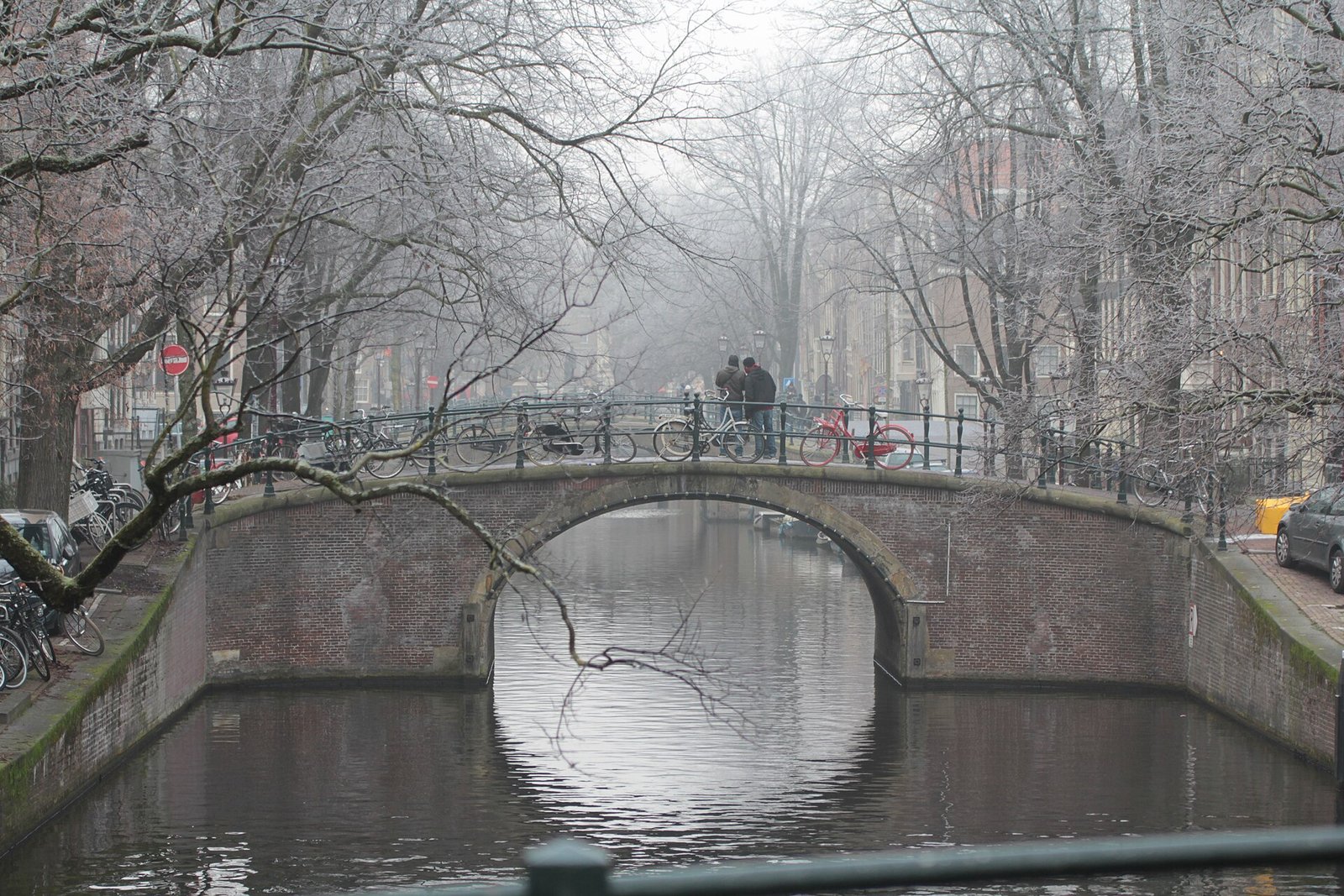
Later the city partly reversed the flattening. Between 1945 and 1982 many iron bridges were given a brick vault again, so they looked like old stone bridges. The famous view down the Reguliersgracht with seven arches in a row looks centuries old, but was largely restored in the 1960s and 1970s. Only two of those bridges really date from the eighteenth century.
Fifteen bridges at once
Want to see how many bridges there are in this part of town? Stand on the corner of the Herengracht and the Reguliersgracht, on the odd-numbered side of the Herengracht. On a clear day you can count up to fifteen bridges there, across both canals. It is one of the most photographed spots in the city, and at its best in the evening when the arches are lit. You will not see a kar-ga-door there any more.
More bridges? Read which bridge is number 1.
- 01The last kar-ga-door, Kikkie of the Prinsensluis, was really called Christiaan Smit and died in 1940.
- 02The oldest city map of 1554 shows 35 bridges; today Amsterdam has more than twelve hundred.
- 03In 1901 the city council wanted to fill in the Reguliersgracht for a tram line.
- 04The seven arches in a row on the Reguliersgracht were largely restored in the 1960s and 1970s.
- 05On the corner of the Herengracht and the Reguliersgracht you can see up to fifteen bridges at once.
Sources (4)
- Het Grachtenmuseum: Bridges (bruggentrekker en kargadoor)
- Bruggen 20 (2012) nr. 3: de bruggen van de Reguliersgracht
- I amsterdam: Bridges of Amsterdam
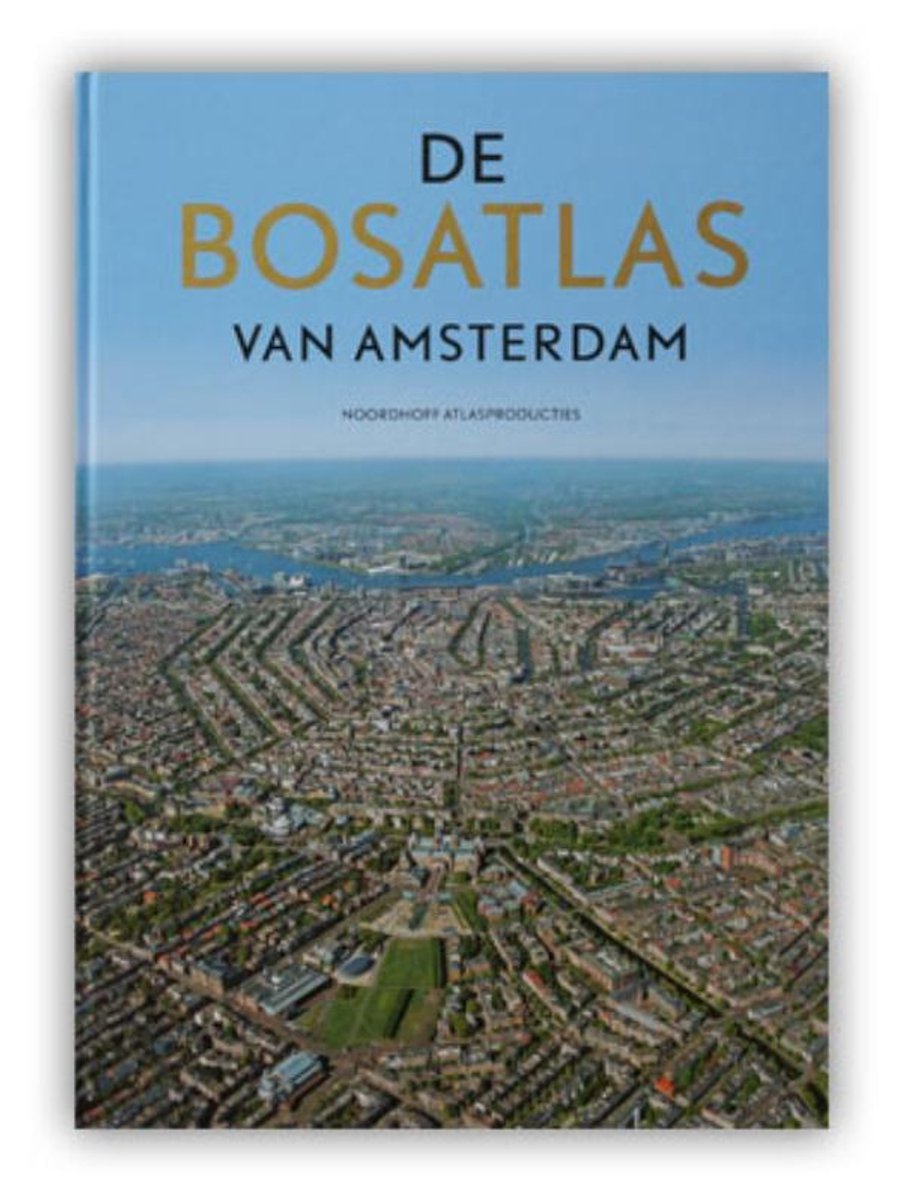
- De Bosatlas van Amsterdam, Noordhoff (2015) (boekentip)