Damstraat
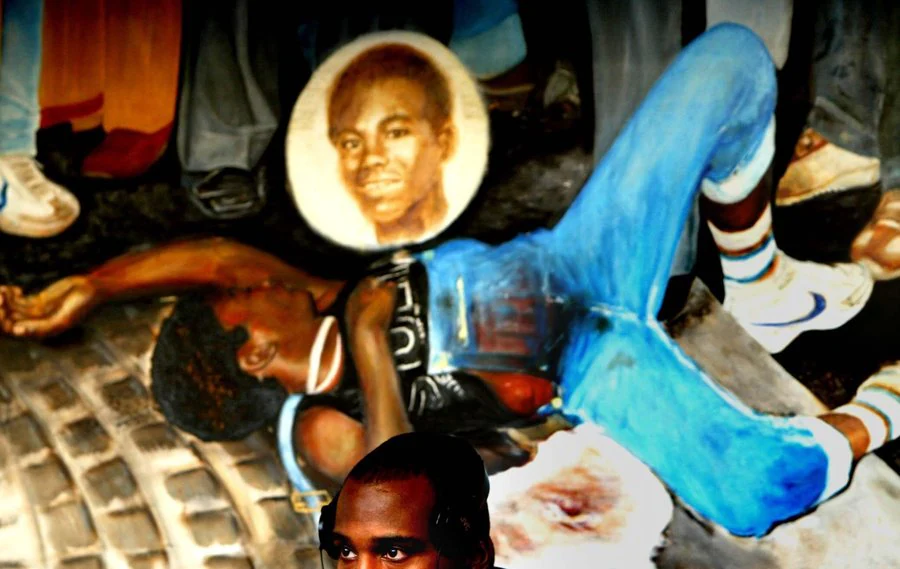
Kerwin, who had lived in the Netherlands since childhood and grew up in the family of his foster parents, the Duinmeijers, had gone out that night to get a sandwich at a shawarma shop on the Damstraat. There he got caught up in a dispute with two skinheads who, under the influence of alcohol, were spouting racist abuse. When Kerwin left the shop, the situation outside escalated quickly. A third skinhead, Nico Bodemeijer, joined the scuffle and almost immediately stabbed Kerwin in the stomach with what later turned out to be a flick knife. Wounded and in a panic, Kerwin ran to the Dam, where he tried in vain to hail a taxi. The taxi driver refused to take him. Although a second driver gave first aid and called an ambulance, it was too late. Kerwin died of blood loss shortly afterwards in the Onze Lieve Vrouwe Gasthuis hospital.
Perpetrator caught
The aftermath of the murder of Kerwin Duinmeijer was intense. Nico Bodemeijer turned himself in to the police a few days later and admitted he had delivered the fatal stab. Because he was a minor, the criminal case against him was heard behind closed doors. Although racist remarks had been made during the incident and Bodemeijer had a tattoo reading '100% white', the juvenile court judge ruled that racism was not a substantial motive for the murder. Bodemeijer was ultimately sentenced to placement in an institution for special therapeutic treatment, but was released early after just four years.
Mama Baranka
Despite the verdict, many in the Netherlands continued to regard the murder as a racist act. The incident led to the founding of the Vrienden van Kerwin (Friends of Kerwin) foundation, which organises an annual commemoration. Every year on 20 August Kerwin is remembered, with the theme of racism at the centre. Initially the commemoration took place at the statue Mama Baranka in the Vondelpark, made by the Dutch-Antillean artist Nelson Carrilho in memory of Kerwin. Later the commemoration was moved to the Dam.
The impact of Kerwin's death reached beyond the commemorations. The murder inspired the Frank Boeijen Groep to write the song Zwart wit (Black white), which drew attention to the problem of racism in the Netherlands. Kerwin's name also lives on in street names: in Diemen a street was named after him, although it was later renamed Kerwin Lucasstraat.
Aftermath
The story of Kerwin Duinmeijer is not only a reminder of a young life cut short far too soon, but also a mirror held up to society. It confronts us with the enduring presence of racism and the need to remain vigilant against the forces of hatred and intolerance. The commemorations, documentaries and public conversations his death has produced serve as a lasting call for justice and equality, so that a tragedy like Kerwin's never has to happen again.