Colourful 11
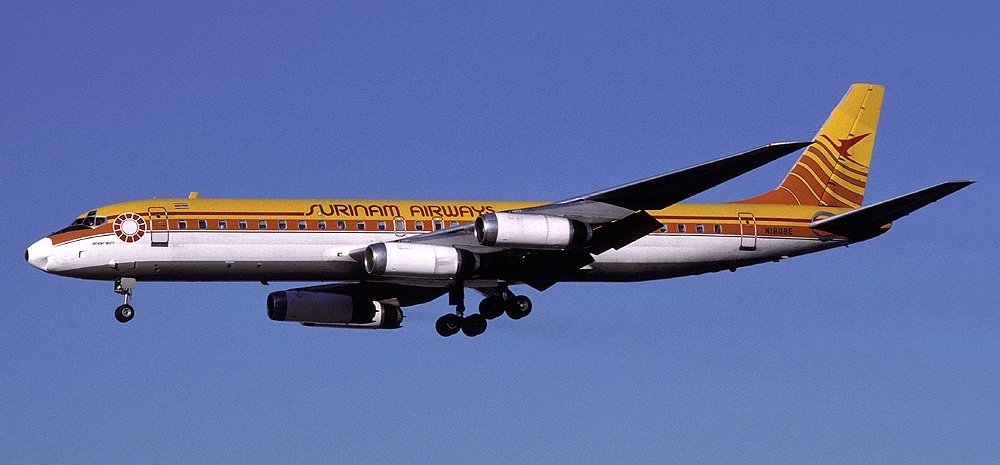
Today flight 764 is carrying 9 crew members and 178 passengers. Mostly Surinamese Dutch people visiting family. But on board is also a special one-off team: Het Kleurrijk Elftal (the Colourful Eleven), made up of professional footballers of Surinamese descent. At the time, the squad included Ruud Gullit, Frank Rijkaard and Henk Fraser, among others. They, however, had not been given permission by their clubs to travel to Suriname and are therefore not on board flight 764.
Fog
Flight 764 has by now entered Surinamese airspace without any problems and is preparing to land. It is now 4 a.m. in the early morning of 7 June 1989 and it is quite foggy over Zanderij. These weather conditions came as a surprise to captain Will Rogers, who had heard nothing about them in an earlier weather report. The fog is manageable, however, and air traffic control clears the DC-8 to land on runway 10. The pilots can carry out this landing visually.
Error after error
For unclear reasons, Rogers ignores the tower's instructions to carry out a visual landing and opts for a landing using the Instrument Landing System (ILS), a system that allows pilots to make an assisted approach to a runway. Rogers had no clearance for this approach, partly because the ILS system at this airport is not reliable enough. The first attempt to land fails, Rogers aborts the landing and tries again. This attempt fails too, as does the one after that. On the fourth attempt to get the DC-8 on the ground, things go horribly wrong. Although the instruments on board indicate that the aircraft is flying far too low, the pilots press on with the landing. A fatal mistake: flight 764 is only 25 metres above the ground and clips the branches of some trees. The DC-8 rolls over along its longitudinal axis and crashes upside down, half an hour after the scheduled landing.
Too old and no papers
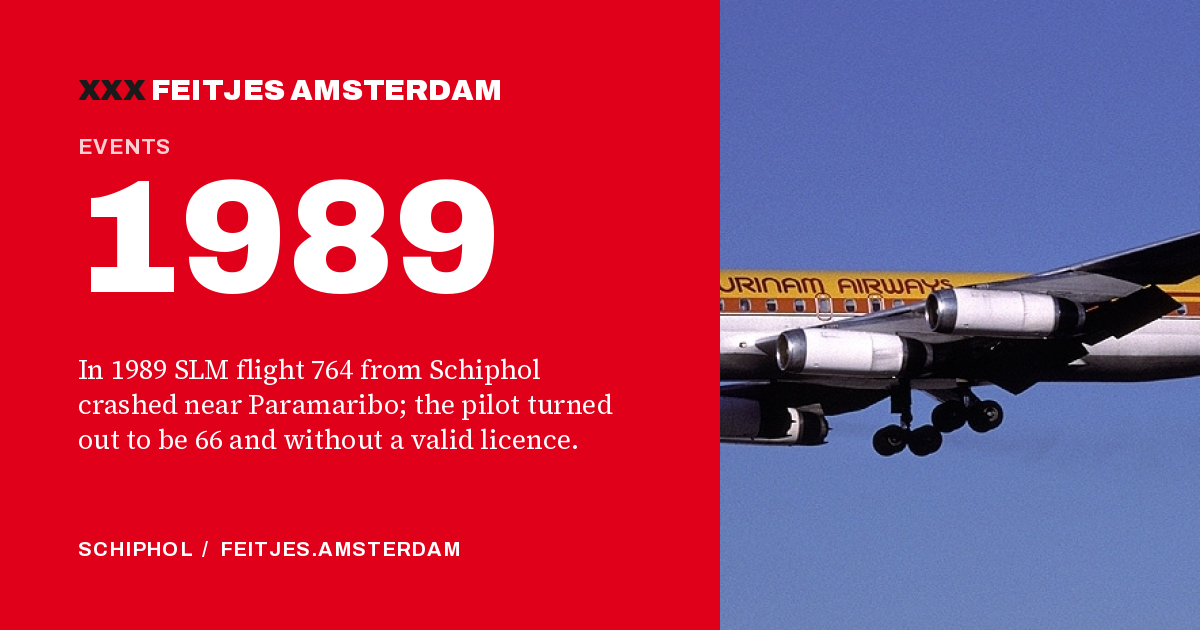
It soon becomes clear that there was nothing wrong with the aircraft, the DC-8. With the crew, on the other hand, there was all the more wrong. Rogers had lied about his age. He turned out to be 66, which is 6 years too old to be allowed to fly under international rules. On top of that, he did not hold a valid certificate for flying a DC-8 and had even been suspended by another employer for earlier mistakes, including landing on the wrong runway. The co-pilot was using a false identity and forged documents. He had probably never held a valid licence for flying passenger aircraft. The cause of the crash: pilot error, in other words, misjudgements by the crew. SLM did not escape unscathed either: the airline did not have its affairs in order and bears part of the responsibility for the crash.
Chaos on the Weteringschans
Immediately after the disaster, chaos reigns. Both in Suriname at the site of the accident and in Amsterdam among the relatives of the victims of the crash. At the post office a list of victims appears, but it also includes people who actually survived the crash. And the SLM office on the Weteringschans is occupied by furious and above all desperate relatives. An airline manager, Robbi Lachmising, is even seriously threatened: "I was pushed into the kitchen by two men. They put a knife to my side. 'Give us two tickets per person, or we'll kill you right here.' I gave them those tickets, what else could I do?", Lachmising said in an interview.
Give us two tickets per person, or we'll kill you right here
A few days after the disaster, a memorial service is held in a packed RAI convention centre. Ruud Gullit and Frank Rijkaard, among others, address the crowd emotionally. A few weeks later there is a benefit match in Rotterdam, but interest in this match is limited. Over time, attention for the disaster fades. That is partly because the Dutch state regarded the disaster mainly as a Surinamese affair, as can be read in the book 'Wat ons bindt' (What binds us) by Anton Slotboom. If you would like to read more about the aftermath of this disaster, this book is highly recommended.
- 01The flight number has a bizarre link to the disaster: 7 (day) 6 (month) 4 (hour).
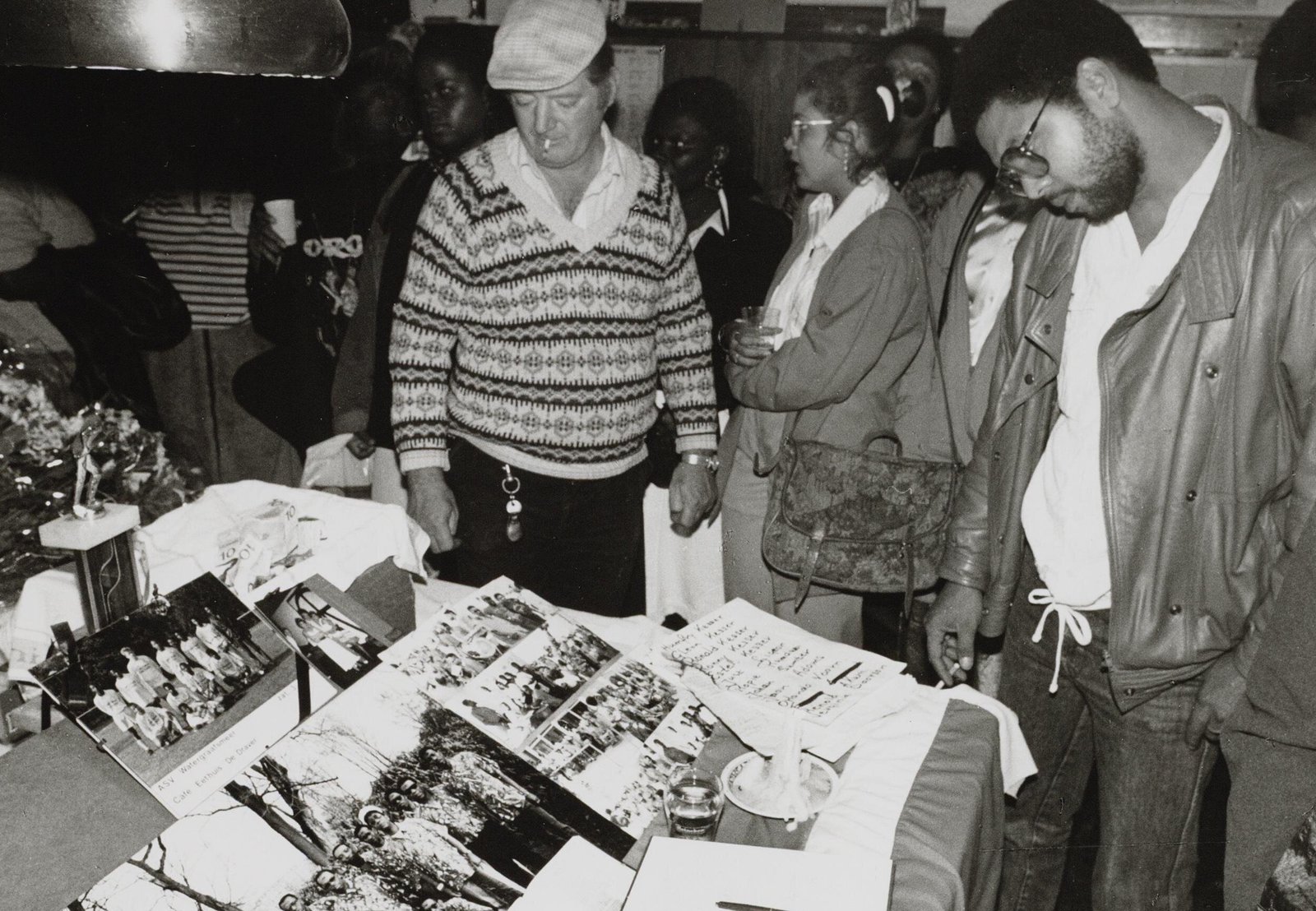
- 02There are several monuments commemorating the disaster. There is a monument in Oost, near the regular café of the Kleurrijk Elftal (Colourful Eleven). PEC Zwolle also has a Fred Patrick stand.
- 03Besides 11 passengers, a dog also survived the crash. It was given the name 'Lucky'.
- 04The complete archive on the SLM disaster is held by the Stadsarchief Amsterdam.