City halls of Amsterdam
Amsterdam has had, so far, four city halls. The first city hall no longer exists; it was built in the 14th century and stood between the Dam and the Nieuwezijds Voorburgwal. After that the city council moved into rather a fine residence: the current Paleis op de Dam (the Royal Palace) was the home of the city government from 1655 to 1808. Then, for a good 180 years, the city's mayors worked from the Prinsenhof on the Oudezijds Voorburgwal, once a monastery and today the Sofitel Legend The Grand Amsterdam.
Where will the new city hall go?
Even before the Second World War, the people at the Prinsenhof were looking for a new location. This was initially found on the Frederiksplein, where there was plenty of room after the fire at the Paleis voor Volksvlijt. This plan fell through after the war, however, and the building of De Nederlandsche Bank rose on the site instead. After yet another failed plan, Den Uyl, at the time still an alderman in Amsterdam, launched a competition in 1964 for the design of a new city hall. Three years later it resulted in more than 800 entries and, after the necessary scheming, the design by the Austrian Wilhelm Holzbauer was chosen. The design was not greeted with cheers; some parties even doubted whether a new building was needed at all. Why not simply reclaim the Paleis op de Dam as city hall?
And where will the new opera house go?
A competition had also been launched earlier for a new opera house in the city. And in this process too, the vacated Frederiksplein came up for discussion; after the idea of a city hall had been shot down, the way was clear for the Opera. The Amsterdam architect Bernard Bijvoet was commissioned to design an opera house on this square. The building never came; the bank was given priority. The next location to come along was the former RAI site on the Ferdinand Bolstraat near the Cornelis Troostplein. The neighbourhood rose up in protest, however, and although approved by the city council in 1967, this plan fell through. Luck was not on the planners' side...
And then it all comes together...
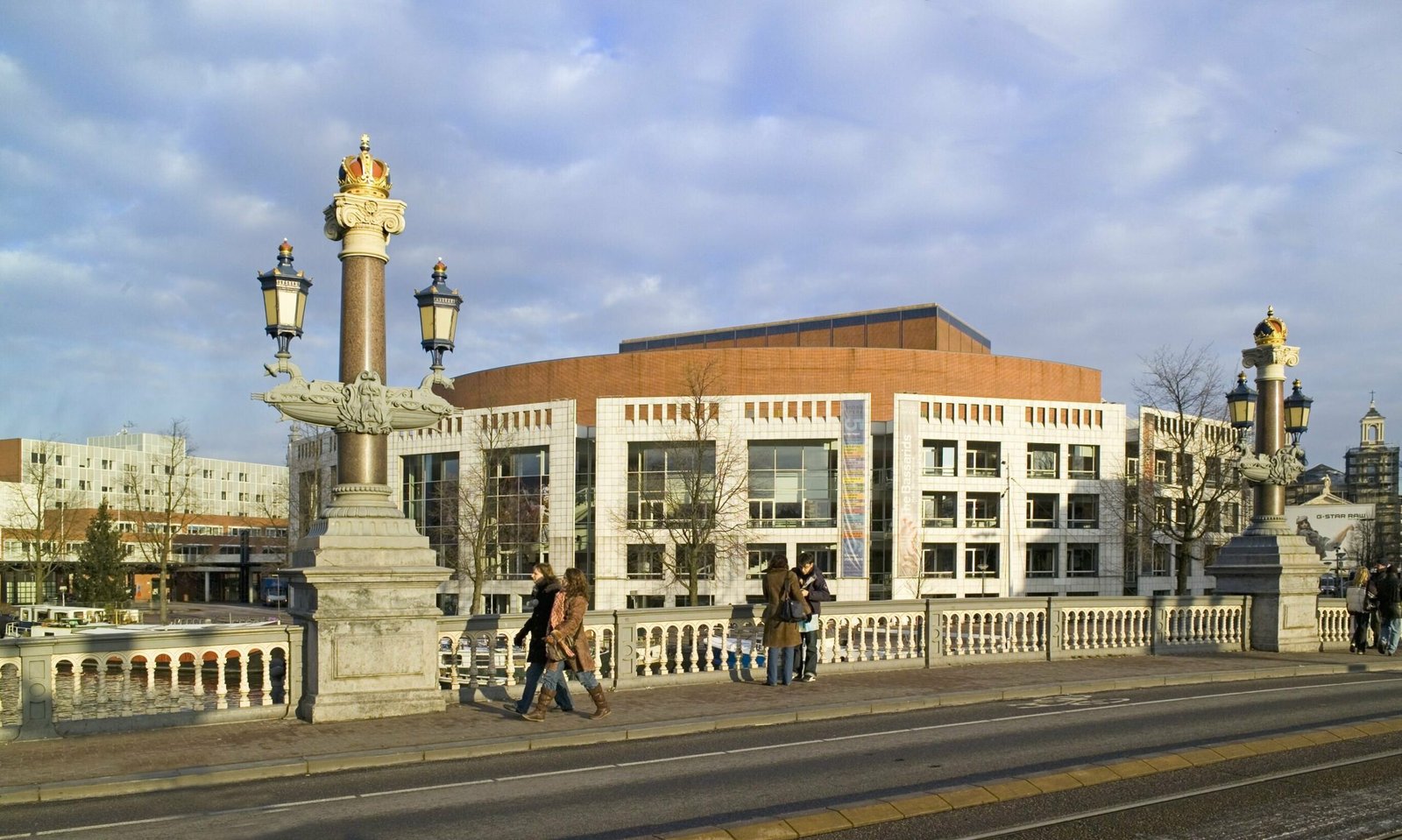
By now we are already at the end of the 1970s. Amsterdam still has no new city hall and still no opera house either. Both buildings needed support from central government to be realised, but the national finances were not in good shape at the time. But then things suddenly move quickly: in April 1979 mayor Wim Polak presents the plans for a combined building to prime minister Dries van Agt. He agrees to an injection of 230 million for the construction of the Stopera, which means the architects of the different buildings now have to come up with a single design together.
There it is: the Stopera
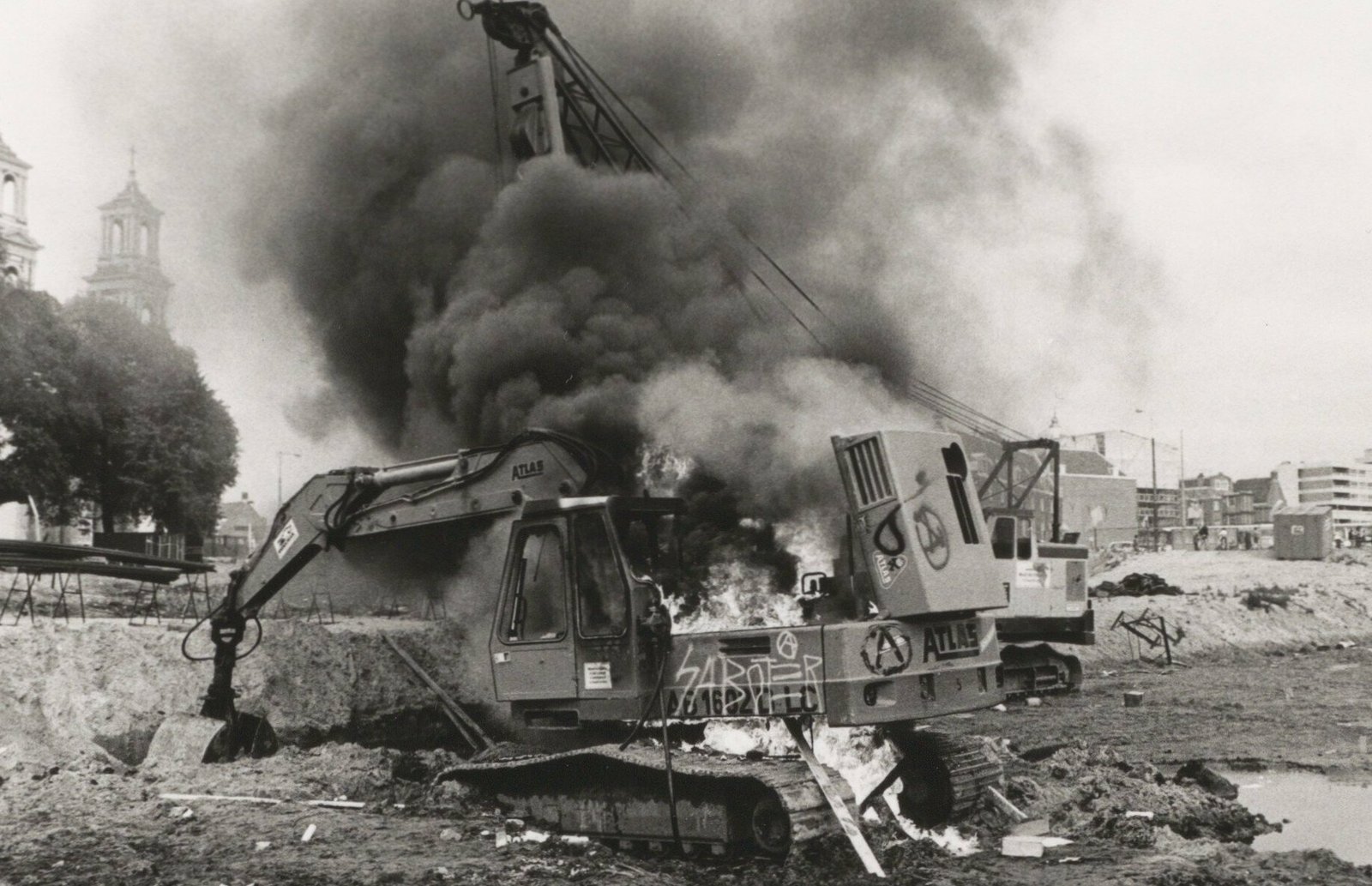
There was still plenty that needed smoothing over when the first pile went into the ground in July 1982. An excavator and various building materials went up in flames in that first week of July. The city council was not to be outdone and sealed off the enormous construction site hermetically with builders' fencing. On 23 September 1986 the opening of the music theatre took place, and two years later the city council moved into the new complex. Although protest flared up again now and then, most Amsterdammers have since taken the building to their hearts, or at least: learned to tolerate it...
- 01Kees Dam, who worked on the 'opera side' as an architect, told Trouw in 2011 that he will never utter the word Stopera. For years he would not even tolerate people saying the word out loud in his presence. He has continued to see the word as an expression of protest against the construction.
- 02Two years before the first pile for the Stopera was driven, the Waterlooplein, by then cleared for construction, was the scene of heavy fighting between the ME (riot police) and squatters, activists and other citizens. These riots became known as the Coronation Riots.