Redundant and filthy
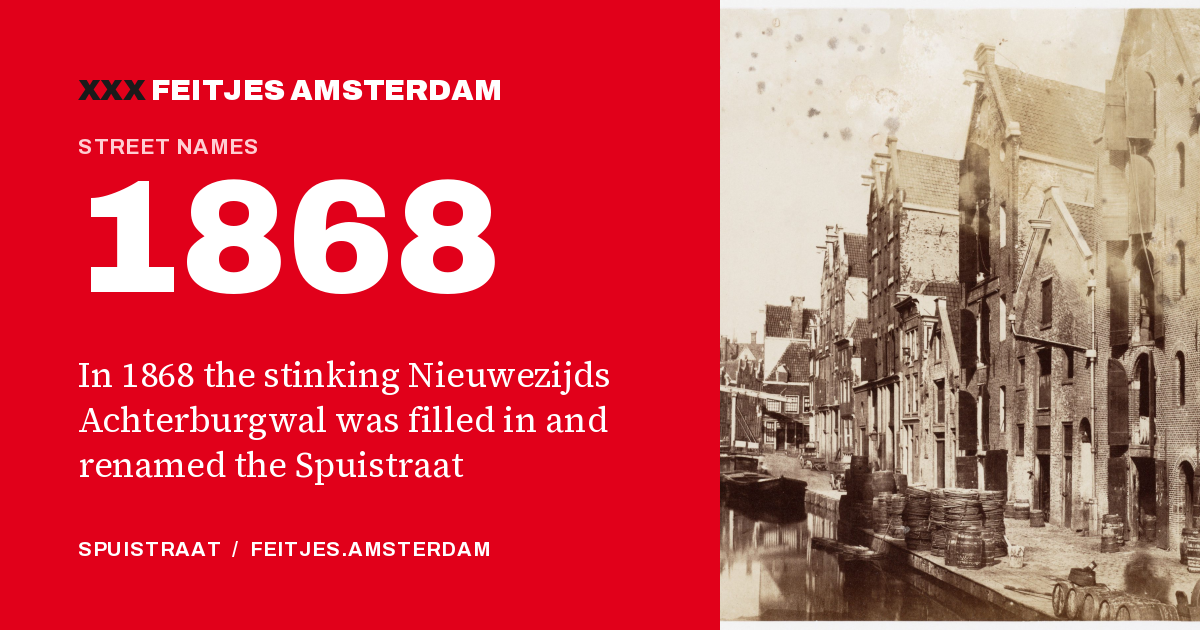
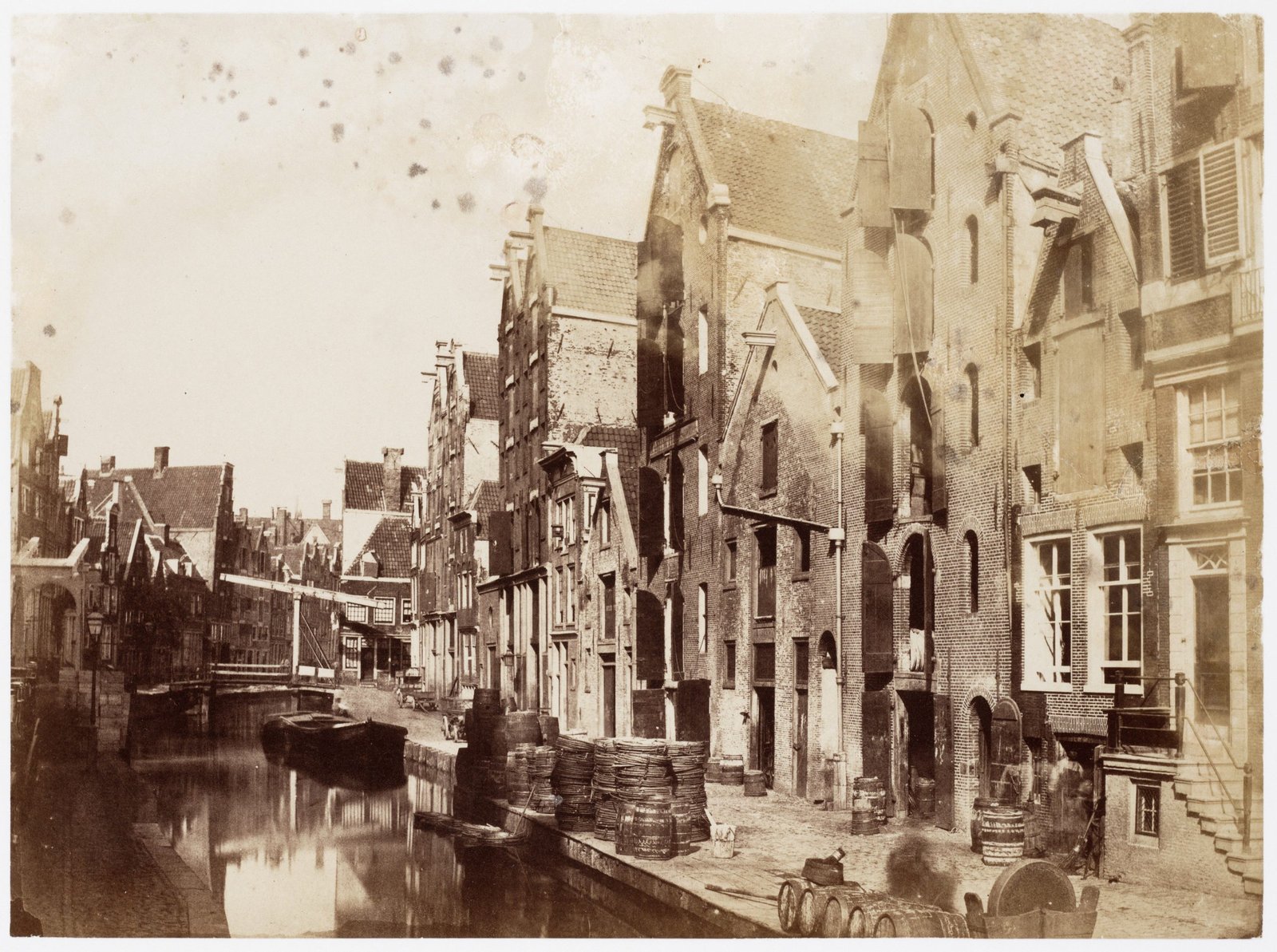
When Amsterdam's city council decided at the end of January 1866 to fill in the Nieuwezijds Achterburgwal, the residents greeted the news with cheers. Because the function of the outermost canal had long since been taken over by the Singel, the Achterburgwal had become polluted. Locally the canal came to be known as a long stinking ditch. Filling it in would improve public health and make the city much more accessible.
Filling in
In the end the canal was only filled in two years later, in 1868. At the same time the Kattegat was tackled, a ditch between the Nieuwezijds Achterburgwal and the Stroomarkt. By then the new name had already been chosen: Spuistraat. Named after a sluice near today's Spui that was meant to discharge ('spuien') the inland water and hold back the water from outside. The name derives from the Middle Dutch 'spoye', which among other things means 'sluice'. Today you might well liken 'spuien' to 'spugen', the Dutch word for spitting.
The many-sided Spuistraat
We are going to write a separate article about the Spuistraat, because plenty has happened there in the past 153 years. The Spuistraat, for instance, became part of the route of the Blauwe Tram (Blue Tram), an electric tram that ran from Amsterdam via Haarlem to Zandvoort. The street also gained national fame thanks to an active squatters' movement, centred among other places on the Tabakspanden and Vrankrijk.