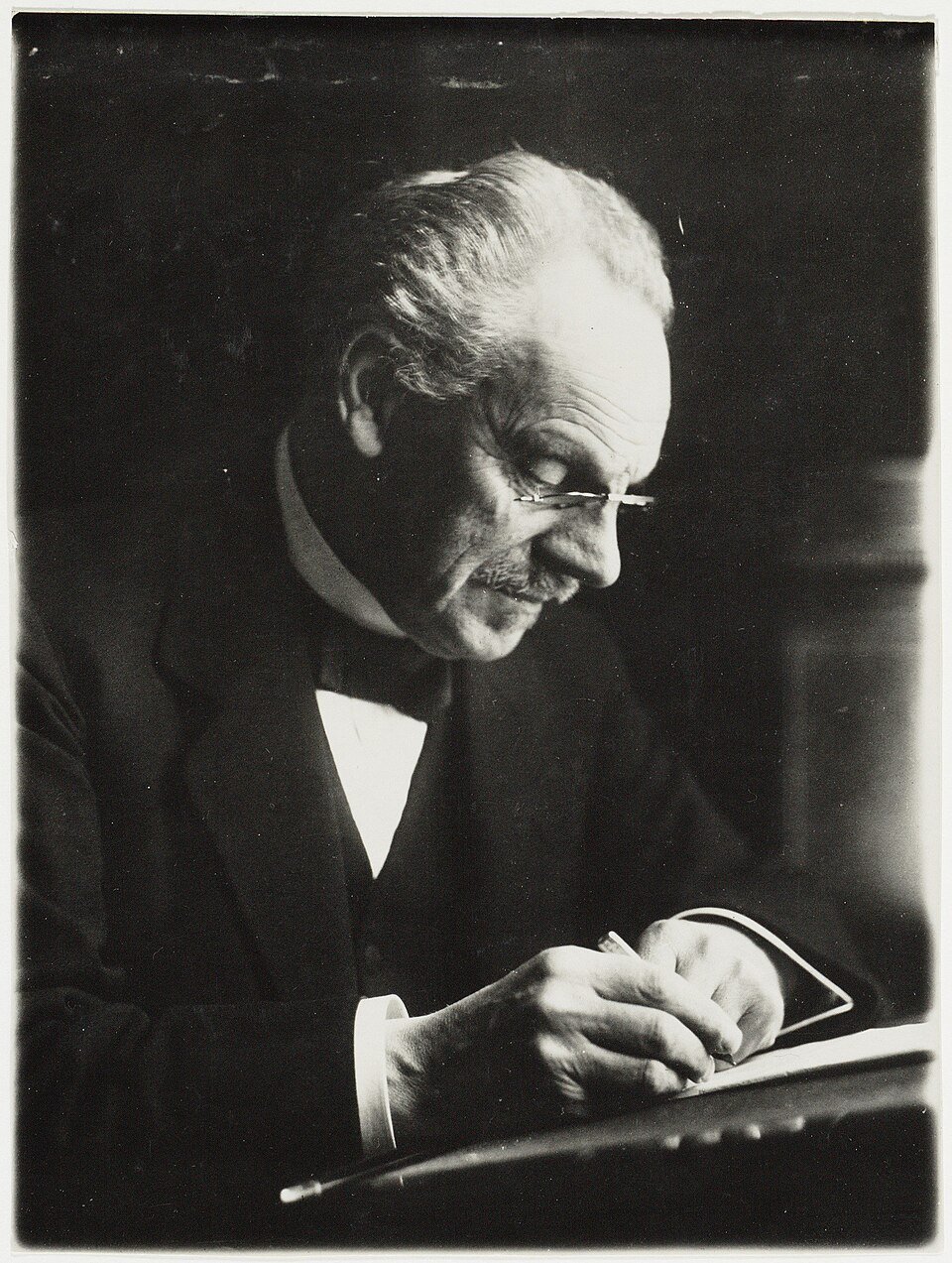
Jan Willem Tellegen
- Mayor
- 1915-1921
- Life
- 1859-1921
- Party
- VDB
The story
Jan Willem Cornelis Tellegen was born in Groningen in 1859, the son of a law professor. He chose engineering instead: he studied civil engineering in Delft, worked on the Groningen-Delfzijl railway and in 1890 became director of public works in Arnhem.
The housing man
In 1901 he moved to Amsterdam to lead the new building and housing inspection department. The timing was perfect: the new Housing Act (Woningwet) had just given Dutch cities the power to tackle slums and build decent homes for working people. Around 1905 Tellegen introduced tough building regulations. Developers and architects complained they were far too strict, but they worked, and many good workers' homes were built. Tellegen brought in young, committed architects and believed beauty mattered: a pleasant place to live would make people happier. That idea was shared by the architects of the Amsterdam School, the city's own expressive brick architecture style.
In 1915 he became mayor. Prime Minister Cort van der Linden chose him, even though the outgoing mayor Röell preferred another candidate. Not everyone was pleased. Liberal councillor Everwijn Lange gave up his seat, because he refused to sit in meetings chaired by a man who until recently had been his subordinate.
War years without a war
The Netherlands stayed neutral in the First World War, but Amsterdam still felt its effects. Food became scarce and Tellegen was in charge of rationing and distribution. In 1917 he faced the Potato Riot, when hungry Amsterdammers took to the streets. He worked well with the socialist alderman Wibaut and mediated in several disputes, including a 1916 conflict between doctors and health insurance funds.
During his term, in 1917, the city council approved Berlage's Plan Zuid, the design for a new district in Amsterdam School style. And on 1 January 1921 Amsterdam grew considerably when parts of neighbouring municipalities were added to the city.
Tellegen did not live to finish his term. He died in Amsterdam on 16 April 1921, still in office. The city was shocked, and a monument soon followed, designed in Amsterdam School style and unveiled in 1929. It stands near the De Dageraad housing complex, on the street that carries his name: the Burgemeester Tellegenstraat.
A family footnote: Tellegen was married to Alida Fock, daughter of Cornelis Fock, who had also been mayor of Amsterdam.
- 01Tellegen was an engineer, not a lawyer: he studied civil engineering in Delft.
- 02From 1901 he ran Amsterdam's building and housing inspection department.
- 03As mayor he faced the 1917 Potato Riot.
- 04He died in 1921 while still in office.
- 05His father-in-law, Cornelis Fock, had also been mayor of Amsterdam.
Stories on the site
Sources (5)
Comments
Do you know more? Do you live there, know your grandfather's story, or spot a mistake? Tell us here. That is how this register grows with what Amsterdammers know.