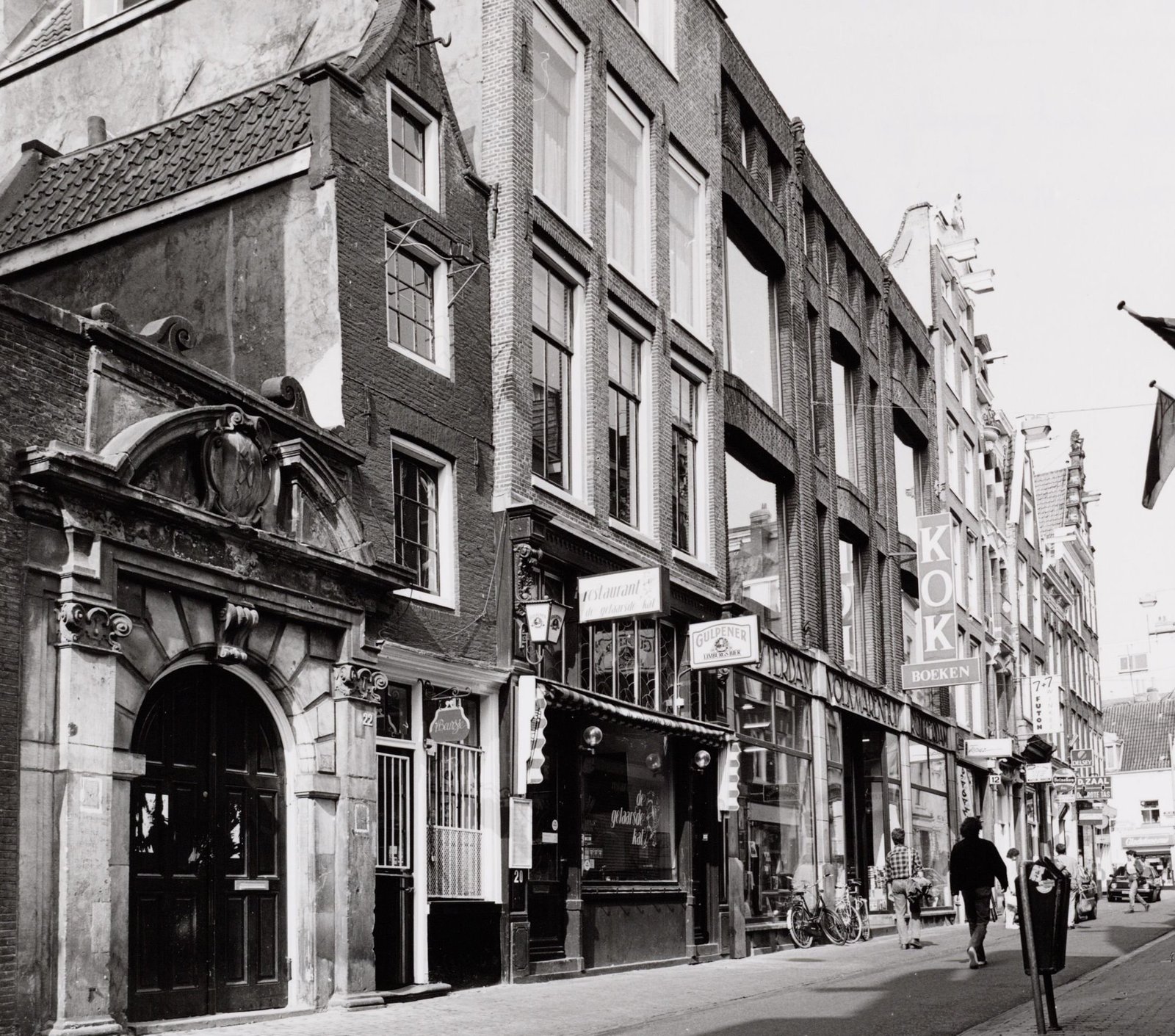
It is an Amsterdam urban myth that the narrowest house in the city stands at the Singel 7. That is probably down to the tourist canal boats, which get to add an extra point of interest to their route that way. Yet the honour of narrowest house goes to another home, one with no canal running past it: Oude Hoogstraat 22. But, it's all in the detail: Singel 7 does hold a title too, the narrowest facade. The house behind it is wider, though; the facade is actually a passageway leading to the house.
So many terms...
Quite a few terms get coined for roughly the same subject. For this article, at any rate, we have used these: smallest house, narrowest house, narrowest facade.
A tax on facade width
Amsterdammers in the seventeenth century had every reason to make their houses as narrow as possible. This was because of the tax on the width of the facade: the narrower, the cheaper.
Lots of doors and windows? That'll cost you!
Another nice titbit: from 1812 to 1896 a different strange tax applied: the one on doors and windows. With this method the value of a property could be assessed 'from a distance'. A sort of council tax valuation, then. But to get around this tax, Amsterdammers started bricking up their windows so that the building had fewer real windows and the tax came out lower. You can still see it to this day, mainly in the old city centre. This tax was not unique to Amsterdam, by the way; check the wiki for more info.
