Double plots
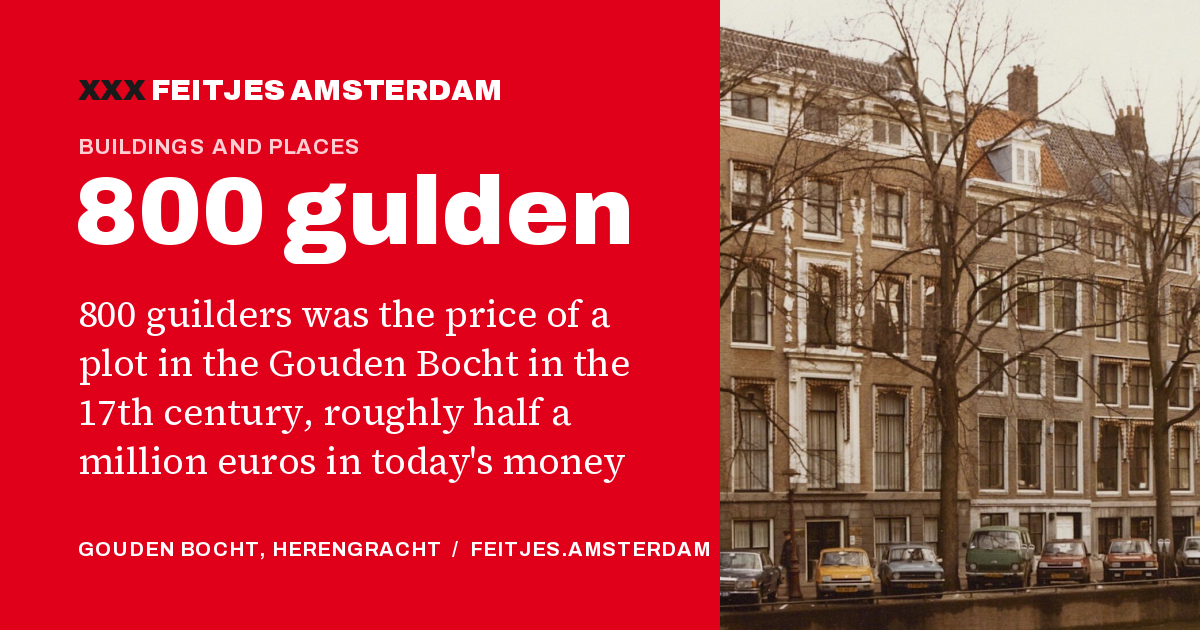
In the 17th century the city is doing well. There is a lot of money in Amsterdam and the population is growing steadily. On top of that there is an urgent need for expansion. And there is a special group of Amsterdammers with a few extra demands: the very richest in the city. Especially for them, a stretch of canal between the Leidsestraat and the Vijzelstraat is set aside. Here the wealthy Amsterdammers can buy double plots. That means they can build canal houses twice as large, with gardens twice as big. The cost of a single plot was 800 guilders. Converted to today's value that is around half a million euros.
Very expensive terraced houses
The sale of the double plots was a great success. This beautiful stretch of the Herengracht sold out in a flash and in no time the most lavish city palaces appeared. They are really more like country estates bordering one another, with an average of a gigantic 1,000 square metres of living space per house. The lucky Amsterdammers who had managed to secure a plot hired leading architects for their new homes, something that is still visible in the architecture to this day. Because of this character, the area soon acquired the name 'Gouden Bocht'.
Riots at the mayor's house
Herengracht 507 was once the home of Amsterdam mayor Jacob Boreel. In 1696 he intended to push through tax reforms, for which some of his fellow citizens wanted to call Boreel to account. His front door was rammed with a lamp post and the rioters streamed into the mayor's house in large numbers. Boreel only just managed to leave his house, which was no easy task, as he was far from mobile. He suffered from gout and was obese. The rioters plundered the house, took things with them or smashed them to pieces on the canal. The uprising was eventually crushed and, as was customary at the time, at least 12 rioters received their punishment for the riots: execution on the Dam.
Worth a walk
On the website of the city of Amsterdam you will find an interesting walk through De Gouden Bocht. Highly recommended, and you will pick up even more facts about the various buildings along the way.