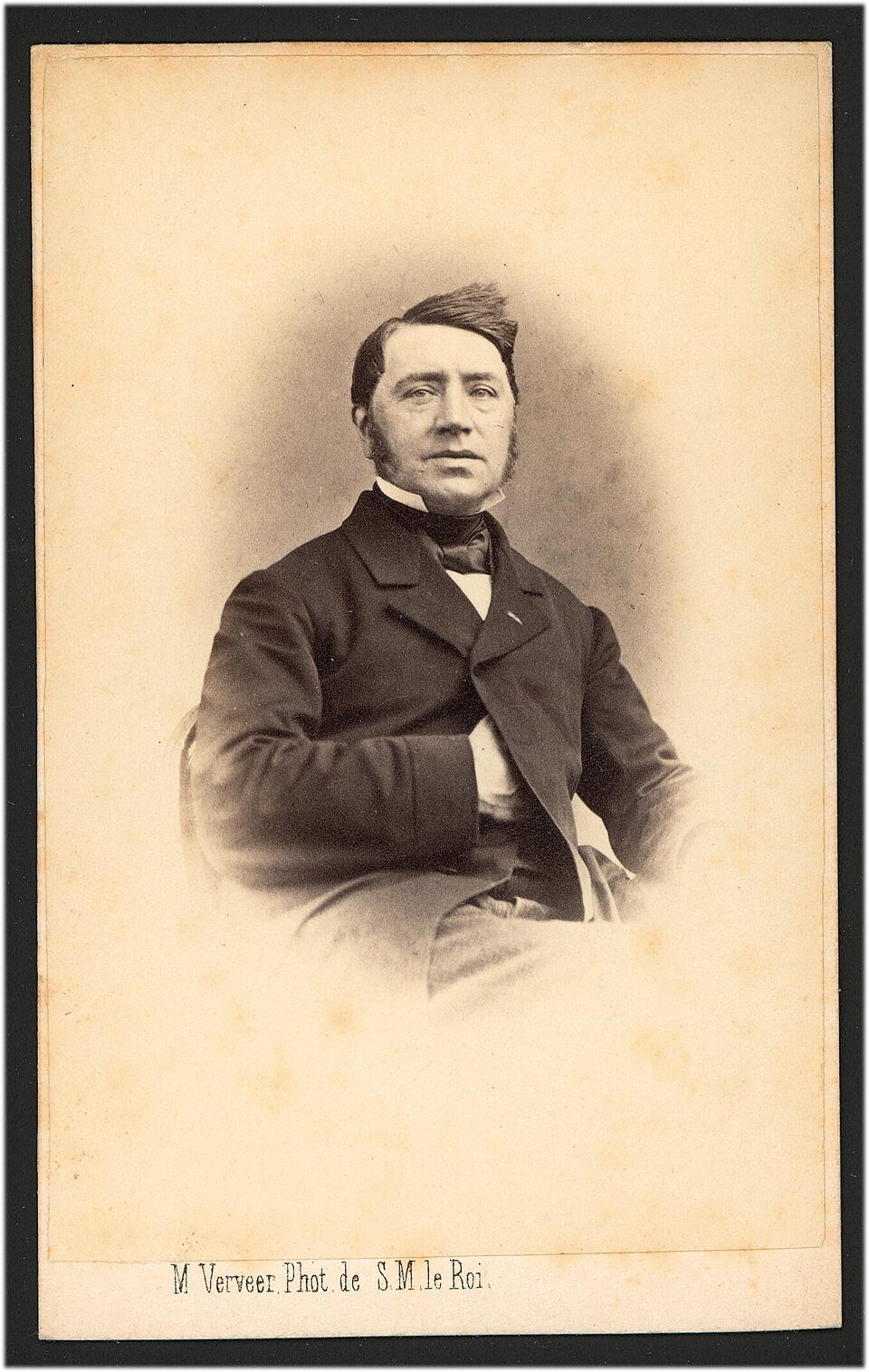
Cornelis Boot
The popular mayor who backed the Palace of Industry and saw Amsterdam join Europe's rail network.
Cornelis Hendrik Boudewijn Boot was born in Arnhem, the son of a Reformed minister. His mother died young and he was raised by an uncle and aunt. He studied law in Leiden and graduated summa cum laude. As a student he co-founded a literary society with his friend Nicolaas Beets, who went on to write the Dutch classic Camera Obscura. Literature remained his hobby, and he left both prose and poetry.
From prosecutor to mayor
From 1838 Boot worked for the public prosecution service in Amsterdam, becoming public prosecutor in 1846. He married Wilhelmina Cramer, daughter of former mayor Willem Daniël Cramer, which according to his biographers did his career no harm. From 1851 he sat on the city council. After a year with no appointed mayor, a royal decree of 10 January 1855 gave Amsterdam Boot, and he took office on 1 February.
Industry, trade and a glass palace
Boot championed industry and trade. He backed the founding of the Paleis voor Volksvlijt, or Palace of Industry, the brainchild of doctor and city reformer Samuel Sarphati. After the 1851 Great Exhibition in London, Sarphati wanted an Amsterdam Crystal Palace, a hall of glass and iron to show off Dutch industry. The city approved the plan in 1855. Construction began in September 1859 in the presence of King William III, and the palace opened on the Frederiksplein in 1864. It burned down in 1929.
During Boot's years Amsterdam was also connected to the European railway network, and the mayor became very popular.
Minister and state councillor
On 18 March 1858 Boot became Minister of Justice. In 1859, together with the finance minister, he passed the Railways Act, which among other things made railway companies liable for damage. He then spent almost thirty years on the Council of State and was a commissioner of De Nederlandsche Bank, the Dutch central bank. He also sat on the supervisory board of the Palace of Industry he had supported as mayor. Boot died in The Hague on 5 November 1892.
- 01As a student, Boot co-founded a literary society with writer Nicolaas Beets.
- 02He was the son-in-law of former mayor Willem Daniël Cramer.
- 03He backed the founding of the Palace of Industry.
- 04Under him Amsterdam was connected to the European rail network.